10+ Years Experience|Insured
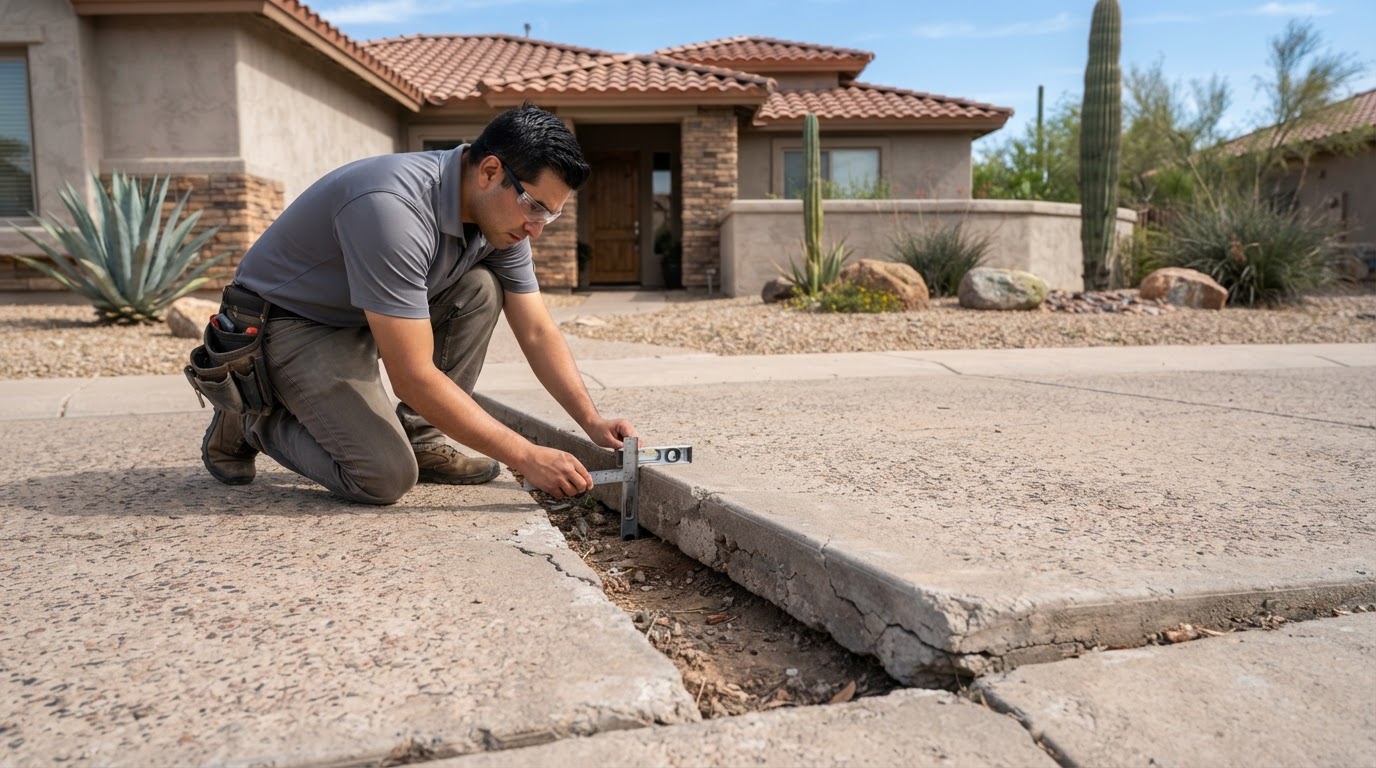
Visibly settled residential concrete driveway panel in an Arizona home setting with one section dropped below its neighbor, a worker evaluating the transition
10+ Years ExperienceInsured

Driveway Concrete Leveling in Tempe, AZ

Driveway concrete leveling addresses settled driveway panels, uneven garage approaches, and slab-to-sidewalk or street transitions where the concrete has dropped, tilted, or lost support. Across Tempe, older and mixed-era homes often carry driveways whose panels have settled at different rates, creating lips at the control joints and changes in how water moves across the surface. Structurally suitable slabs may be candidates for lifting; badly broken or deteriorated slabs may need replacement.

With 10+ years of hands-on experience and insured service, we evaluate each driveway slab before recommending a repair, and we select the method — polyurethane foam, mudjacking, or another appropriate approach — based on the slab condition, settlement, and access. We do not promise that lifting alone resolves off-site or broader drainage defects, and we are honest when replacement is the better value. The goal is a smoother, safer driveway surface restored without tearing out a liftable slab.

10+ Years Experience · Insured

Request an Estimate

Tell us about your project. We’ll follow up with clear pricing and next steps.

The customer/project address for the work.

Text message consent (optional)

Consent is optional. You may request an estimate without opting in to text messages.

Why Choose Tempe Concrete Leveling for Driveway Leveling in Tempe?

A driveway is a high-use surface, and the repair has to fit both the slab and the transitions around it. We focus on getting that read right.

  • 10+ Years of hands-on concrete leveling experience.
  • Insured service for residential driveway slab work.
  • Driveway-specific slab assessment before any recommendation.
  • Attention to garage and walkway transitions, not just the panel.
  • Repair method selected to the slab condition, not a default.
  • Honest repair-vs-replacement guidance for broken driveway slabs.
  • Drainage awareness across the driveway surface.
  • Transparent cost factors and clear next steps.

What Driveway Problems Can Concrete Leveling Address?

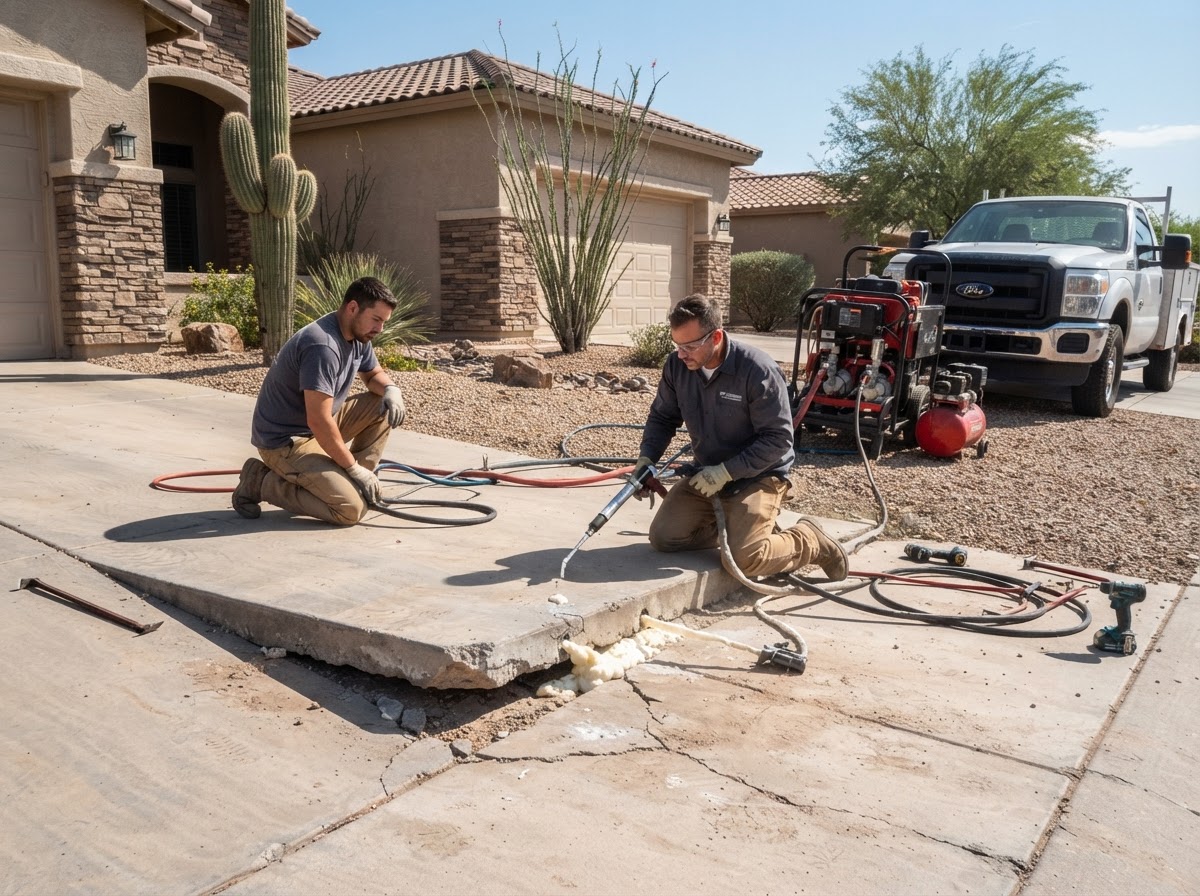
Crew lifting a settled driveway slab using injection equipment in an Arizona residential driveway

Sunken Driveway Panels

Concrete leveling addresses sunken driveway panels where one section has dropped below its neighbor, creating a lip at the control joint and an uneven driving and walking surface on the property.

We measure the elevation difference, check the condition of the control joints and expansion joints, and lift the settled panel using a controlled method such as polyurethane foam or mudjacking through small injection points.

The result is a smoother driveway surface with reduced trip edges and improved transitions, restoring everyday use without tearing out and repouring a liftable panel.

Uneven Garage Approaches

Concrete leveling addresses uneven garage approaches where the driveway slab has settled at the garage threshold, creating a bump or gap at the transition into the garage.

We assess the slab condition at the garage approach, measure the settlement, and lift the sunken section with a controlled method through small injection holes, checking the transition relative to the garage floor.

The outcome is a smoother garage transition with reduced bump and better support beneath the approach slab, restoring everyday vehicle access where the slab is suitable to lift.

Driveway-to-Walkway Transitions

Concrete leveling addresses driveway-to-walkway transitions where settlement at the edge of the driveway has created an uneven step to an adjoining sidewalk or front walk.

We assess the elevation difference at the transition, check the condition of the adjoining slabs, and lift the settled section using a controlled method through small injection points with awareness of the surrounding surfaces.

The result is a more consistent transition between the driveway and walkway, reducing trip edges and improving the flow across the property where the slabs are suitable.

Settled Sections Affecting Surface Drainage

Concrete leveling addresses settled driveway sections that have changed the surface drainage, causing water to pool or move across the driveway in an unintended direction.

We check the slab condition and the drainage direction, then lift the sunken section with a controlled method to improve the slope, filling accessible void space beneath the slab to improve support.

The result is improved surface drainage across the driveway where settlement altered the elevation, though leveling alone does not resolve broader off-site drainage defects when another issue exists.

What Causes Driveway Concrete to Settle in Tempe?

These are possible contributors to driveway settlement — not a confirmed diagnosis for every sunken panel. We identify likely factors during the inspection.

Poorly Compacted Fill Beneath a Driveway

When the base material or subgrade beneath a driveway was not adequately compacted before the concrete was placed, the fill can consolidate over time and leave the slab without full support. This is a possible contributor to driveway settlement, not a certainty for every panel.

Washout or Erosion Beneath Slabs

Water moving beneath or around a driveway slab can erode the base material and wash out supporting fill, creating a void the panel eventually drops into. Visible erosion or washout indicators help us identify this as a likely factor.

Drainage and Changing Soil Moisture

Surface drainage that routes water toward or under a driveway, combined with seasonal changes in soil moisture, can shift the support beneath the slab. Tempe's long dry periods and monsoon moisture can contribute to these conditions over time.

Loss of Support Around Slab Edges

The edges of a driveway slab can lose support when the fill beneath them erodes or settles, causing the edge to drop and create a lip at the joint. We assess the accessible void around the edges during the inspection.

What Are the Signs a Driveway Needs Leveling?

One Panel Sits Lower Than the Next

When one driveway panel has dropped below its neighbor at the control joint, the elevation difference is a visible sign that settlement has occurred. We measure the step at the joint to judge whether lifting the lower panel is appropriate.

The Garage Transition Has Become Uneven

A bump, gap, or lip at the garage threshold is a sign that the approach slab has settled. We assess the transition relative to the garage floor before recommending a lift.

Water Collects or Moves Differently Across the Driveway

When water begins pooling or moving across the driveway in a new pattern, it can signal that the slab elevation has shifted. Standing water does not always mean settlement — it can also come from a broader drainage issue — so we assess both.

A Slab Edge Creates a Walking or Driving Transition

A sharp step at a driveway edge or joint creates a transition for both vehicles and pedestrians. We measure the elevation difference to determine whether lifting the settled section is appropriate.

How Does Our Driveway Leveling Process Work?

Our process is consistent across driveway work: inspect, measure, select, lift, and check. We never assume a driveway slab should be lifted before we look at it.

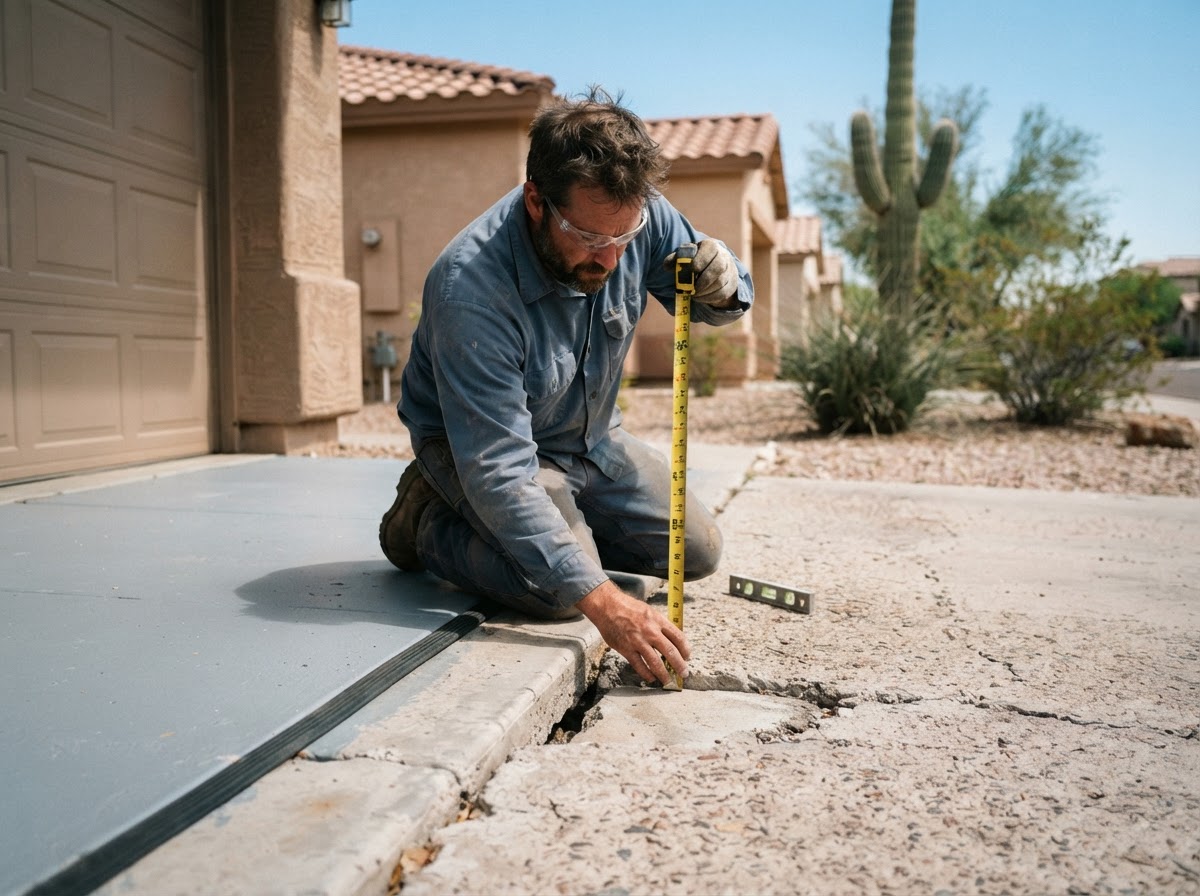
Worker measuring the uneven transition between a settled driveway and a garage floor threshold in an Arizona home

Inspect the Driveway Slabs, Joints, and Surroundings

We inspect the driveway slab integrity, cracks, control joints, expansion joints, drainage, and the transitions to the garage and walkway. The inspection also looks at the surrounding surfaces and site access to judge whether the concrete is suitable to lift. We identify visible void indicators and drainage patterns that may have contributed to the settlement. This step determines whether lifting, stabilization, or replacement is on the table.

Measure Settlement and Evaluate Support

We measure the elevation difference across each affected panel and at every problem transition, recording where the concrete has dropped and how much lift is needed. The measurement also assesses the accessible void and support conditions beneath the slab. This tells us whether the driveway panel can hold its lifted elevation. If the slab cannot, we point you toward replacement before any work begins.

Select the Appropriate Lifting Method

We select the lifting method based on the driveway slab condition, void, access, and the transitions around it. Polyurethane foam, mudjacking, or another appropriate method may fit, and neither is automatically best for every driveway. The choice is made after the inspection, not as a default. You receive a clear explanation of why we recommend the approach.

Lift and Stabilize Suitable Driveway Panels

We lift the settled driveway panel using the selected professional method through small injection points, with no DIY procedural detail provided. The method is introduced beneath the concrete in a controlled way to raise the settled section and fill accessible void space. We monitor the elevation as the lift progresses to avoid over-raising the slab or stressing the joints. The work is performed by our crew using professional leveling equipment.

Check Transitions, Drainage, and Finish

We confirm the final elevation relative to the adjacent panels and check the transitions at the garage and walkway. We check the drainage direction across the driveway surface and finish the small injection holes so the surface is left tidy. A walk-through with you confirms the result and answers any questions. We report the actual outcome honestly, without promising perfection where the slab condition makes that unrealistic.

How Much Does Driveway Concrete Leveling Cost in Tempe?

Driveway concrete leveling cost in Tempe depends on the number and size of settled panels, amount of lift required, access, void volume, selected repair method, and condition of the concrete. Because verified numeric ranges have not been supplied, we publish transparent cost factors here rather than fabricated dollar figures.

Single-Panel Driveway Cost Factors

A single settled driveway panel with minor settlement and good access is the least complex scenario. Cost is driven by the panel size, the number of injection points, and whether the panel can be lifted in one visit.

Multi-Panel Driveway Cost Factors

Multi-panel driveway work costs more because it involves more affected panels, greater void volume, and sometimes limited equipment access. The lift complexity and the chosen method both move the price.

Leveling Versus Driveway Replacement

Replacement can be more appropriate when driveway slabs are heavily fractured, deteriorated, or unsuitable to lift. Spending on a lift that will not hold is not a saving, so we point badly failed driveway concrete toward replacement or further evaluation.

Need real numbers for your slab?

Request an on-site evaluation and estimate so we can measure your specific slab and give you honest repair-vs-replace guidance.

Call (480) 914-9859

Numeric local price ranges: MISSING — not yet verified. We will not invent dollar figures.
Ready for a Level, Safer Slab?

Tell us about your settled concrete. We follow up with clear cost factors and repair-vs-replace guidance — no pressure, just an honest read.

(480) 914-985910+ Years Experience · Insured

Request an Estimate

Tell us about your project. We’ll follow up with clear pricing and next steps.

The customer/project address for the work.

Text message consent (optional)

Consent is optional. You may request an estimate without opting in to text messages.

Why Tempe Property Owners Choose Tempe Concrete Leveling

A driveway is a high-use surface, and the repair has to fit both the slab and the transitions. Here is what that focus means.

  • 10+ Years of hands-on concrete leveling experience.
  • Insured service for residential driveway slab work.
  • Driveway-specific slab assessment before any recommendation.
  • Attention to garage and walkway transitions, not just the panel.
  • Repair method selected to the slab condition, not a default.
  • Honest repair-vs-replacement guidance for broken driveway slabs.
  • Drainage awareness across the driveway surface.
  • Transparent cost factors and clear next steps.

8 Quick FAQs

Can a sunken concrete driveway be leveled?+

A sunken concrete driveway can often be leveled when its slabs remain structurally suitable for lifting. We measure the elevation difference, check drainage and joints, and lift the settled panel with an appropriate method. A driveway slab that is badly broken or deteriorated may be better replaced, which we will tell you up front.

Can you level only one section of a driveway?+

Yes, a single settled driveway panel can often be lifted without leveling the entire driveway, when that panel is suitable for lifting. We assess the panel condition and the transitions to its neighbors before recommending a partial lift. The surrounding panels must be sound enough to provide a consistent transition.

Can a cracked driveway slab still be lifted?+

Some cracked driveway slabs can still be lifted, but the crack pattern, deterioration, and structural condition determine whether lifting is appropriate. Isolated cracks in otherwise sound concrete may not prevent lifting, while widespread or structural cracking can mean the slab will not hold. We assess the cracks before recommending any repair.

Is polyjacking or mudjacking better for a driveway?+

Neither method is automatically best for every driveway. Polyjacking uses small injection points and an expanding foam, while mudjacking uses a heavier cementitious slurry through larger holes. The right choice depends on the driveway slab condition, void, access, and load — we recommend the method that fits your specific driveway.

Polyurethane Foam Concrete Lifting →
Can leveling fix the transition between the driveway and garage?+

Leveling can often improve the transition between the driveway and garage by lifting a settled approach slab back toward the garage floor elevation, when the slab is suitable. We measure the transition relative to the garage floor before recommending a lift. A badly broken approach slab may need replacement instead.

Can driveway leveling improve drainage?+

Driveway leveling can sometimes improve drainage when settlement has altered the slab elevation and changed how water moves across the surface. It does not replace broader drainage correction when another issue, such as a site grading problem, is the real cause. We assess both the slab and the drainage during the inspection.

When should a driveway slab be replaced instead?+

A driveway slab should be replaced instead of leveled when it is heavily fractured, severely deteriorated, or structurally unsuitable for lifting. A slab that cannot predictably hold its lifted elevation is a poor candidate for leveling and may be better replaced or evaluated by a specialist.

How do I request driveway concrete leveling in Tempe?+

Call (480) 914-9859 or submit the form on this page with your Full Name, Phone, Email, project Address, and Service Request. We follow up to schedule an on-site evaluation, assess the driveway slab, and give a repair recommendation and estimate based on the actual conditions.

Request Driveway Concrete Leveling in Tempe

Call now or send your project details. We'll evaluate your driveway slab, recommend lifting only where it's appropriate, and give you clear cost factors and next steps.

Call (480) 914-985910+ Years Experience · Insured

Request Driveway Concrete Leveling in Tempe

Five quick fields — Full Name, Phone, Email, project Address, and Service Request. We'll take it from there.

(480) 914-985910+ Years Experience · Insured

Request an Estimate

Tell us about your project. We’ll follow up with clear pricing and next steps.

The customer/project address for the work.

Text message consent (optional)

Consent is optional. You may request an estimate without opting in to text messages.

10+ Years Experience · Insured
Call Now