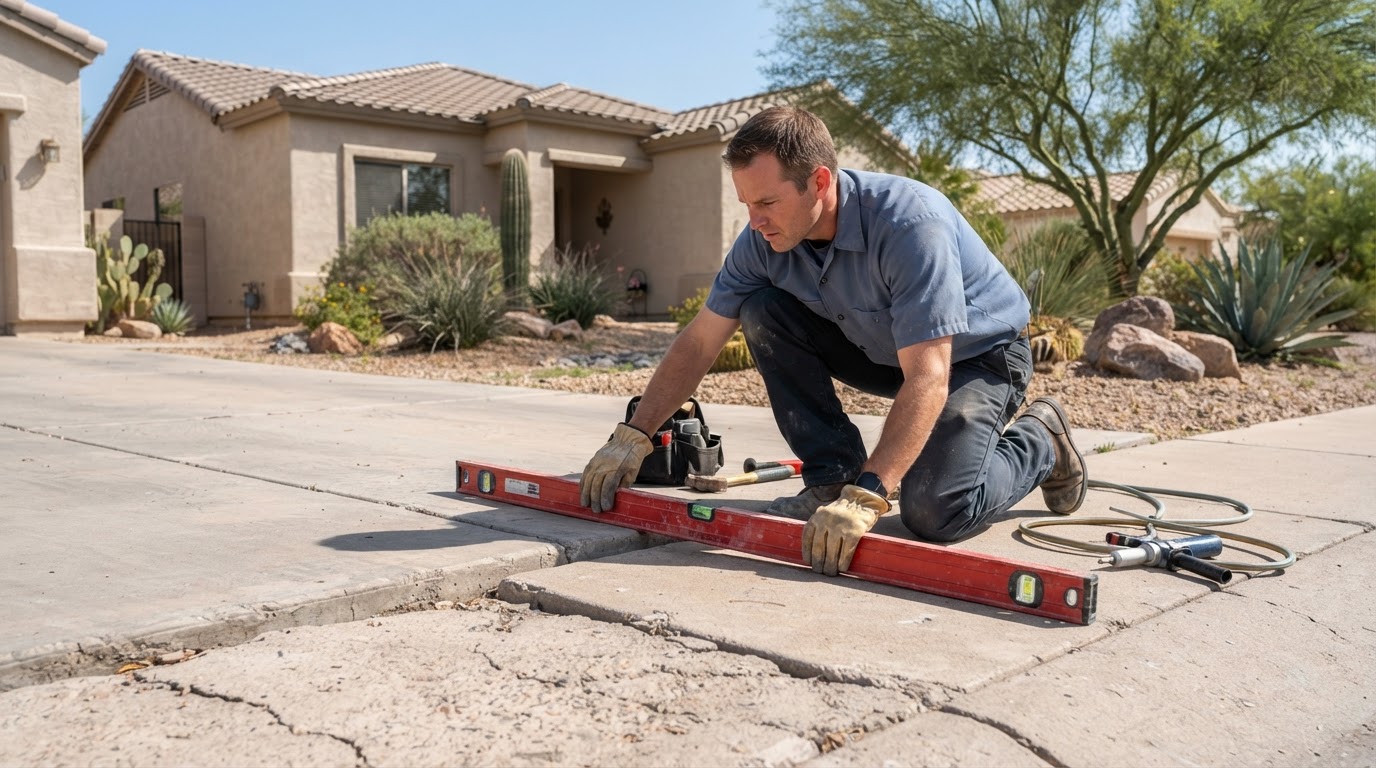
Each service below is a distinct application with its own slab condition, access, and drainage considerations. Every block follows the same structure: what and where, how with real methods and materials, and the practical outcome.
Concrete Lifting
Concrete lifting is the broad service of raising settled, uneven residential slabs back toward their intended elevation across driveways, walkways, patios, pool decks, and garage floors where the concrete remains structurally suitable to lift.
We measure the elevation difference, identify accessible voids beneath the slab, and lift the settled section using a controlled method such as polyurethane foam or mudjacking through small injection ports, chosen for the slab and access conditions.
The result is a level, stable surface restored without demolition and repouring, with finished injection holes and a walk-through to confirm the elevation and drainage before we leave.
Learn more about Concrete Lifting →Polyjacking / Polyurethane Foam Concrete Lifting
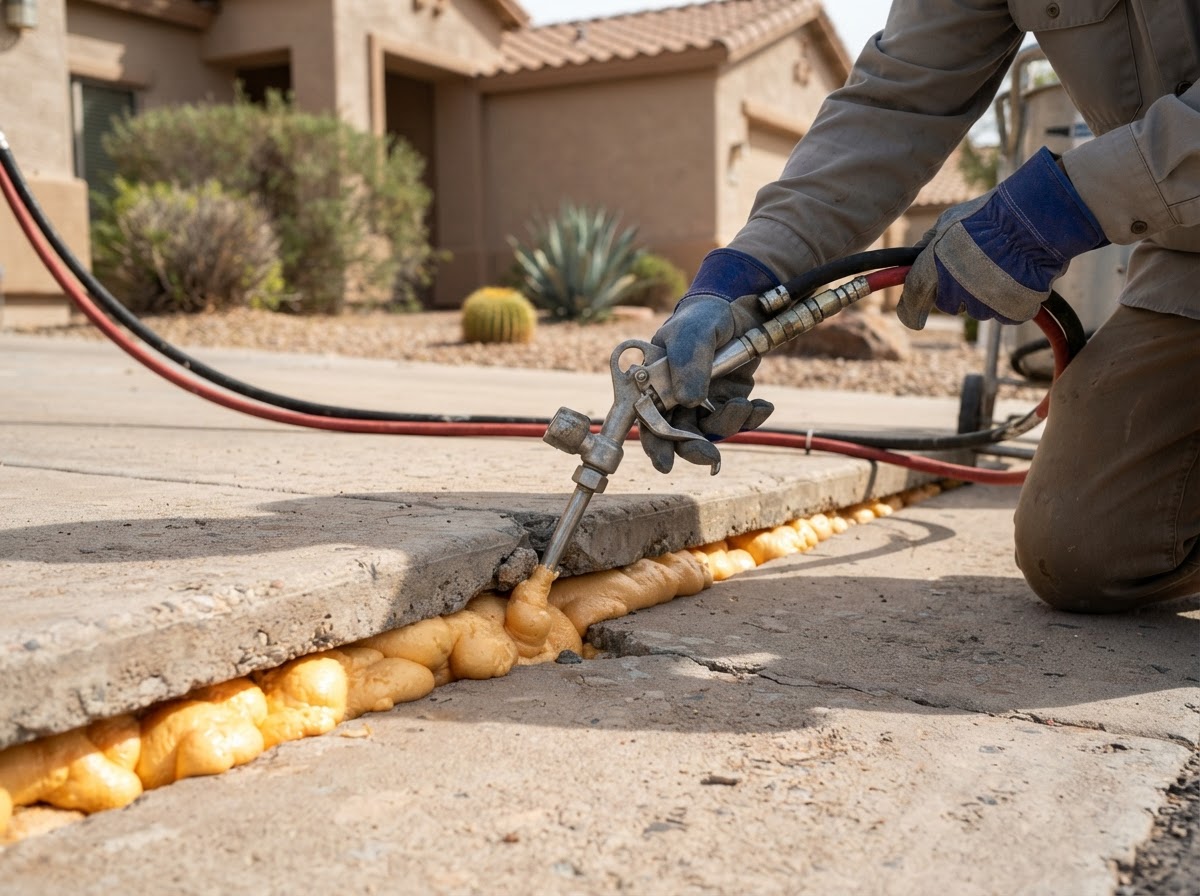
Polyjacking, or polyurethane foam concrete lifting, raises settled residential slabs using small drilled injection points and an expanding polyurethane material that lifts the concrete as it fills the void beneath.
We drill small injection ports through the slab, pump the expanding polyurethane beneath it, and the material lifts the concrete in a controlled way while improving support across the treated area.
The outcome is a lifted slab with relatively small injection holes that are patched and finished, offering controlled lifting with less disruption than removal and repouring.
Learn more about Polyjacking / Polyurethane Foam Concrete Lifting →Mudjacking / Slabjacking
Mudjacking, or slabjacking, is a traditional lifting method that pumps a cementitious slurry beneath a settled residential slab to raise it, typically through larger injection holes than polyurethane lifting.
We assess whether a heavier slurry fill suits the slab condition, void size, and expected load, and pump the material beneath the concrete to lift the settled section where access allows for the larger holes.
The result is a relevelled slab with restored support, finished at the injection points — a method we consider where the slab and conditions make it the appropriate choice, not as a default for every job.
Learn more about Mudjacking / Slabjacking →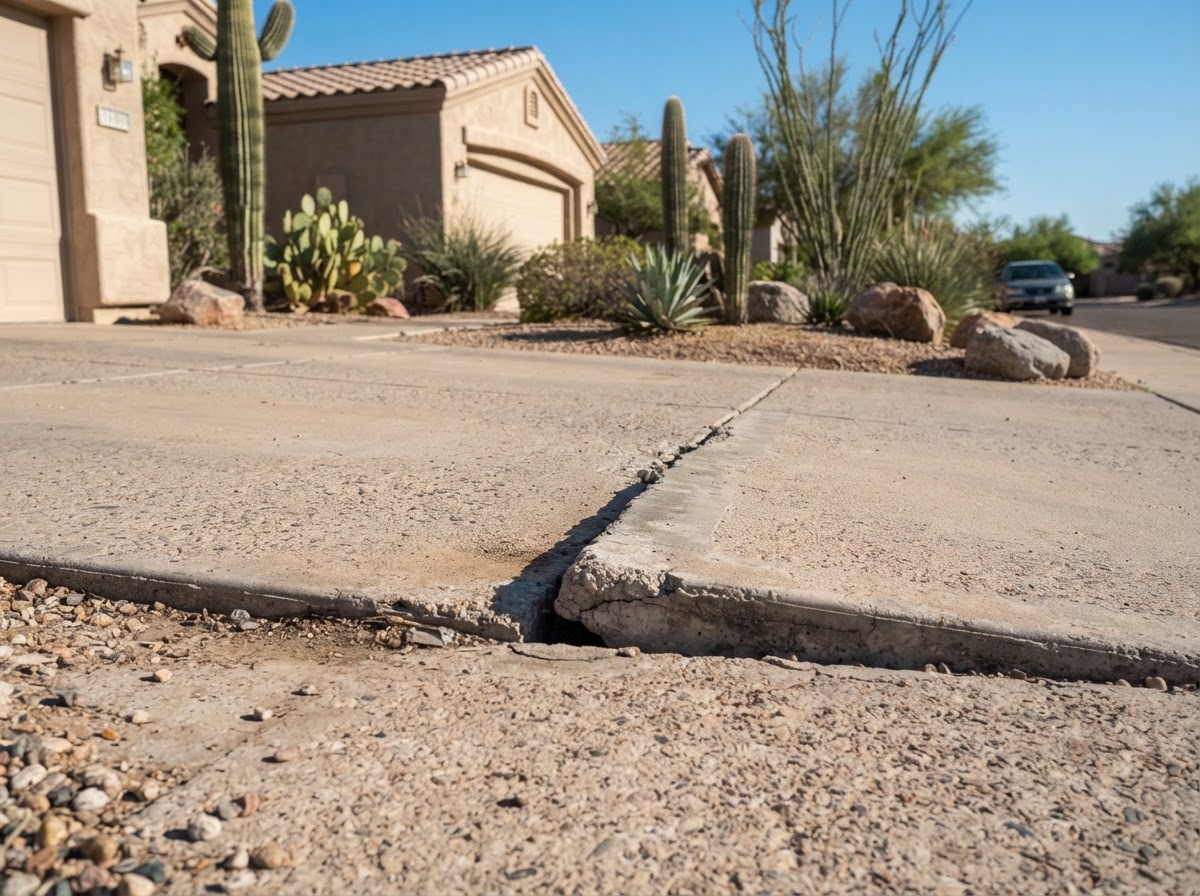
Driveway Concrete Leveling
Driveway concrete leveling addresses sunken or tilted driveway panels, transitions between slabs, and garage approaches on residential properties where the concrete slab remains structurally suitable for lifting.
We measure the elevation difference, check drainage and the condition of control joints and expansion joints, then lift the settled panel using polyurethane foam or an appropriate method through small injection holes.
The result is a smoother, safer driveway surface with reduced trip edges and improved surface drainage, restoring everyday use without tearing out and repouring a liftable slab.
Learn more about Driveway Concrete Leveling →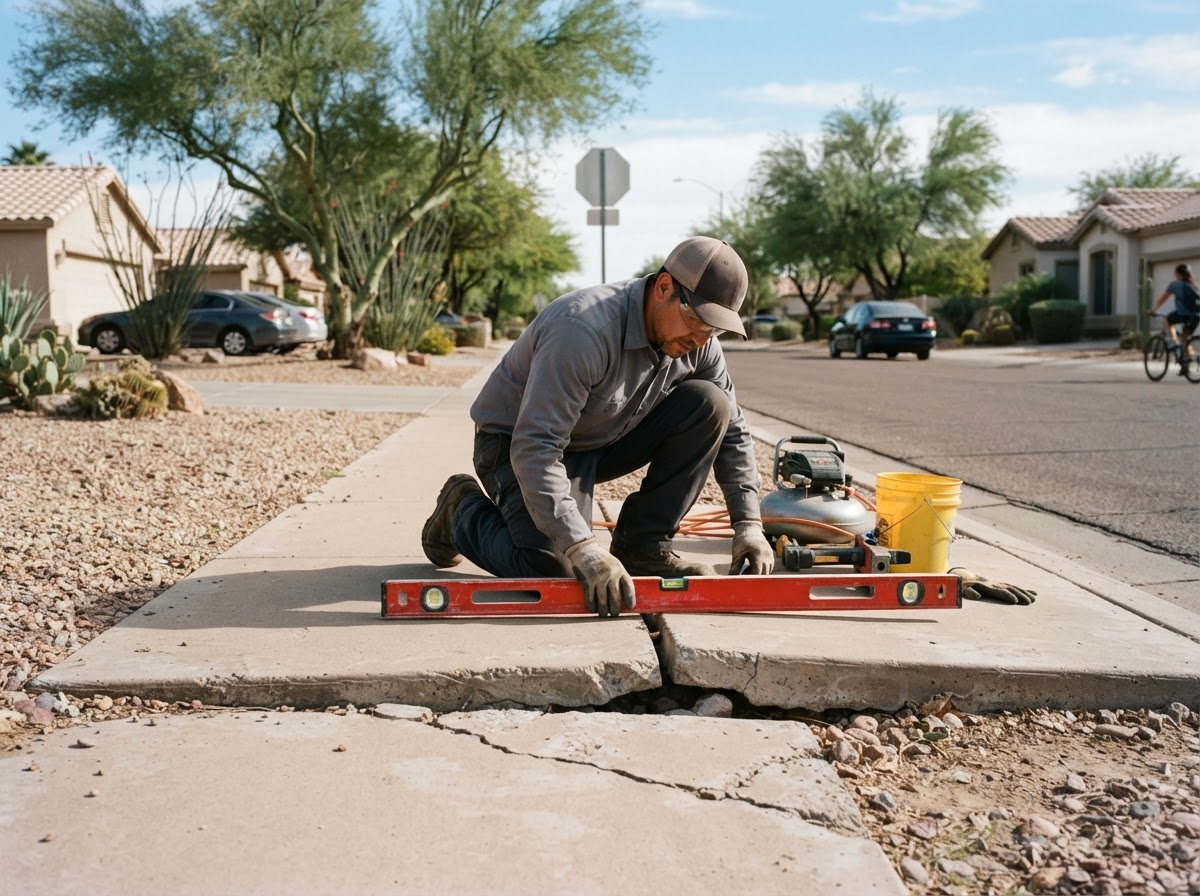
Sidewalk & Walkway Leveling
Sidewalk and walkway leveling corrects raised or sunken panel transitions that create trip hazards on front walks, side yards, and pathways where the sidewalk panel can be safely lifted.
We assess the elevation difference at each joint, distinguish private-property walks from public right-of-way sections where applicable, and lift the offending panel using controlled injection through small drilled ports.
The outcome is a flatter, more walkable surface with fewer trip hazards, improving safety for residents and visitors without replacing structurally sound concrete.
Learn more about Sidewalk & Walkway Leveling →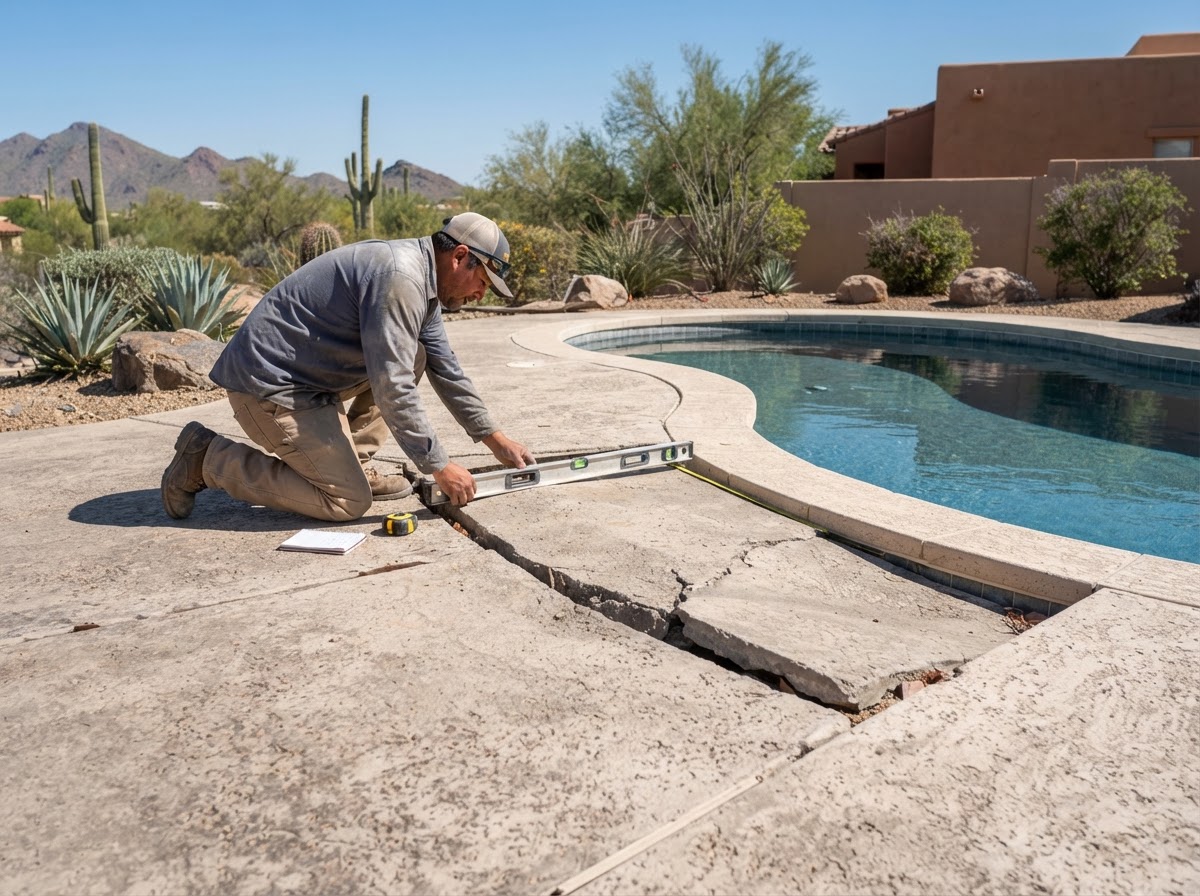
Patio Concrete Leveling
Patio concrete leveling relevels settled patio slabs in outdoor living areas where sections have dropped, rock, or slope, including slabs that have begun draining toward a structure.
We check the slab condition and the drainage direction, then lift the sunken section with a controlled method and small injection holes, filling accessible void space beneath the patio slab to improve support.
The finished patio is more stable and usable, with improved surface drainage away from the home and a reduced risk of pooling or rocking underfoot during everyday use.
Learn more about Patio Concrete Leveling →Pool Deck Concrete Leveling
Pool deck concrete leveling addresses uneven pool-surround concrete that creates trip hazards or drainage issues around the deck, working carefully around pool structures and coping.
We lift settled deck panels with a controlled method through small injection points, checking elevation and drainage relative to the pool, while never claiming lifting repairs pool-shell structural defects.
The result is a safer, more even deck surface with reduced trip edges near barefoot traffic, improving the comfort and safety of the pool area for the property owner.
Learn more about Pool Deck Concrete Leveling →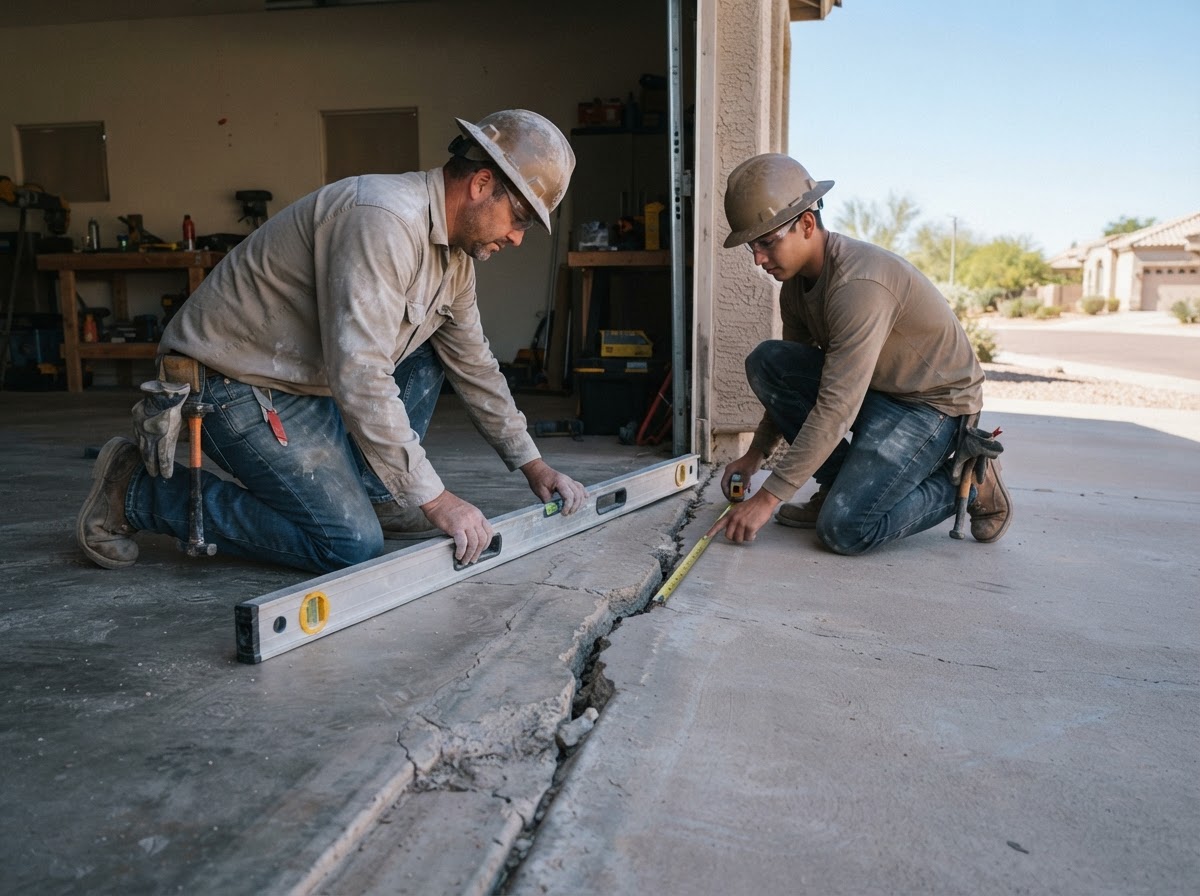
Garage Floor Leveling
Garage floor leveling addresses settled garage slab sections and transitions at door openings where voids have developed beneath the slab and the concrete remains suitable for lifting.
We assess the slab for cracks and voids, measure the settlement, and lift the sunken section using a controlled method with small injection holes, filling accessible void space to improve support.
The outcome is a more even garage floor with a smoother transition at the door and better support beneath the slab, restoring everyday parking and storage use.
Learn more about Garage Floor Leveling →Concrete Slab Leveling
Concrete slab leveling is the general-purpose correction of isolated slab settlement for structurally suitable concrete, applicable to a range of residential flatwork where the slab can be predictably lifted.
We evaluate the slab condition, measure the elevation difference, identify any accessible voids, then lift the settled slab using a professional method matched to the slab, void, and access conditions.
The result is a level, stable slab restored to its intended elevation, with improved support and a finished appearance at the injection points after cleanup.
Learn more about Concrete Slab Leveling →Trip Hazard Repair
Trip hazard repair addresses sharp elevation transitions between adjacent residential slabs that create pedestrian trip edges on walkways, driveways, and patios where the lifted slab is suitable.
We measure the elevation difference at the joint, assess whether lifting the lower panel or adjusting the transition is appropriate, and use a controlled method to reduce the step through small injection holes.
The result is a reduced or eliminated trip edge and a safer walking surface, lowering the risk of stumbles and falls without replacing slabs that remain in sound condition.
Learn more about Trip Hazard Repair →Void Filling & Slab Stabilization
Void filling and slab stabilization address accessible void space beneath suitable residential slabs where support has been lost to erosion, washout, or settlement of the base material.
We locate the unsupported area, fill the accessible void with an appropriate material through injection, and improve support beneath the slab without implying deep-soil stabilization or foundation repair.
The outcome is a more stable, better-supported slab with reduced risk of further settlement in the treated area, extending the usable life of concrete that remains in suitable condition.
Learn more about Void Filling & Slab Stabilization →