Frequently Asked Questions About Concrete Leveling in Tempe, AZ
Tempe Concrete Leveling is an insured concrete leveling service with 10+ years of hands-on experience serving Tempe and nearby areas. This resource answers the questions property owners ask before hiring: how to choose a contractor, the leveling methods, how pricing works, what makes a slab suitable to lift, and specifics about driveways, sidewalks, patios, pool decks, permits, our service area, and what happens after you request an estimate.
Hiring Concrete Leveling Help in Tempe
How do I know whether a concrete leveling contractor is a good fit for my project?+
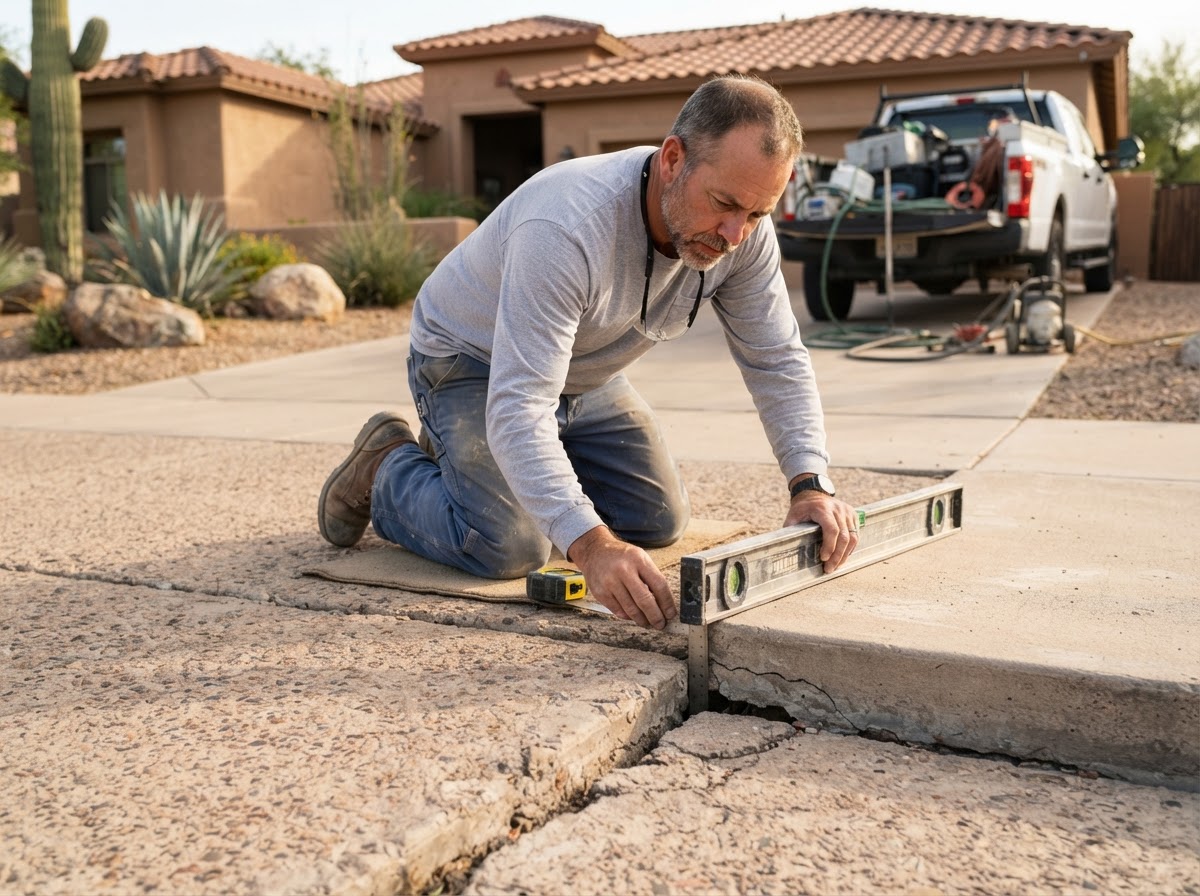
A good fit comes down to evaluation quality, insurance, relevant experience, a clear explanation of methods, repair-vs-replace judgment, and a clear estimate — not unsupported ratings. Ask whether the contractor inspects the slab before recommending lifting, whether they are insured, and whether they will tell you when replacement makes more sense than leveling. The right contractor gives you an honest read on your specific slab.
How much experience does Tempe Concrete Leveling have?+
Tempe Concrete Leveling works with 10+ years of hands-on concrete leveling experience. That experience covers inspecting settled slabs, measuring elevation differences, and making lifting and stabilization decisions across driveways, sidewalks, patios, pool decks, garage floors, and commercial flatwork. We do not publish a specific founding year because we have not verified one.
Is Tempe Concrete Leveling insured?+
Yes, Tempe Concrete Leveling is insured for residential and commercial slab work. We do not state specific policy limits or carrier details; we confirm the insured status that matters to property owners.
Should a contractor inspect the slab before recommending lifting?+
Yes, a contractor should always inspect the slab before recommending lifting. An on-site inspection reveals the crack pattern, deterioration, elevation difference, drainage, and surrounding conditions that determine whether the slab can hold its lifted elevation. Recommending a lift without looking risks selling a fix that will not last on an unsuitable slab.
Concrete Leveling Pricing and Estimates
How much does concrete leveling cost in Tempe?+
Concrete leveling cost in Tempe depends on the slab size, amount of settlement, site access, number of slabs or injection areas, void volume, chosen repair method, and slab condition. Because a verified local pricing range has not been supplied, we publish transparent cost factors rather than fabricated dollar figures. An on-site evaluation gives you numbers specific to your slab; see our homepage cost section for the factors that move a price.
See homepage cost factors →What affects the price of concrete lifting?+
The price is affected by the area of the slab, the lift height, how accessible the site is, how many slabs or injection areas are involved, the volume of voids being filled, the chosen repair method, and the slab condition. A small, easily accessed panel with minor settlement costs less than a large lift with limited access and significant void volume.
Is concrete leveling always cheaper than replacement?+
No, concrete leveling is not always the better-value option. Suitable, intact slabs can often be lifted at a lower cost than removal and repouring, because leveling avoids demolition, hauling, forming, and cure time. But badly damaged, fragmented, or structurally unsuitable slabs may be better replaced, since lifting a slab that cannot hold its elevation is not a saving.
What happens when I request an estimate?+
When you request an estimate, we contact you to confirm your project address and service request, then schedule an on-site evaluation. We assess the slab, measure the settlement, and give a repair recommendation and estimate based on the actual conditions. We do not promise a specific response-time guarantee, but we follow up to move the conversation forward.
Methods and Repair Decisions
What is concrete leveling?+
Concrete leveling is the process of raising a settled, uneven slab back toward its intended elevation by lifting it from beneath rather than tearing it out and replacing it. A contractor evaluates the slab, then uses a controlled method — such as polyurethane lifting or mudjacking — to lift and stabilize suitable concrete. It is appropriate only when the slab is structurally sound enough to hold the lift.
What is polyurethane foam concrete lifting?+
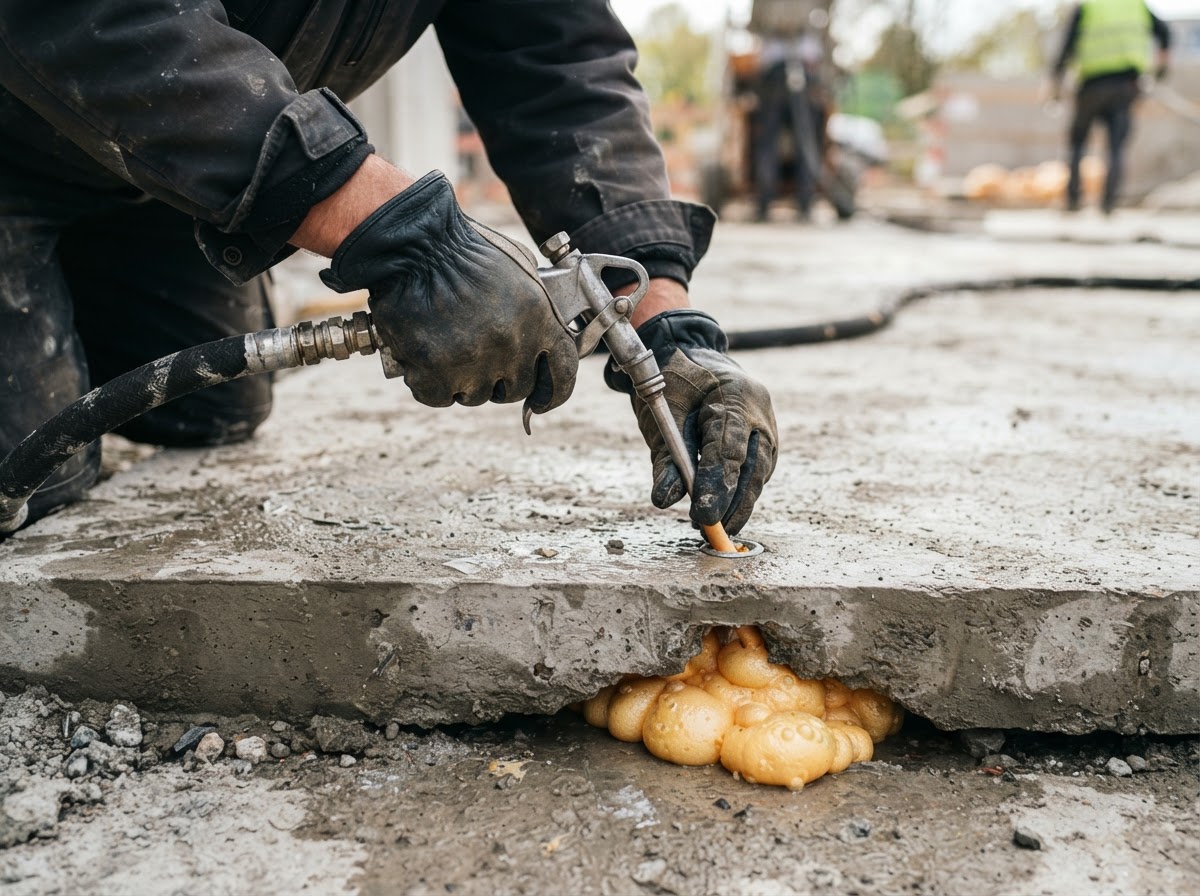
Polyurethane foam concrete lifting is a method that uses small drilled injection points and an expanding polyurethane material to raise a settled slab. The foam is pumped beneath the concrete and lifts it as it expands, offering controlled lifting with relatively small holes. The method is chosen based on the slab condition, void, and access — not as a universal fix.
Polyurethane Foam Concrete Lifting →What is polyjacking?+
Polyjacking is another name for polyurethane foam concrete lifting. It refers to the same process of injecting an expanding polyurethane material through small drilled ports to lift a settled slab. The terms polyjacking and polyurethane lifting describe the same method and are often used interchangeably in the trade.
What is mudjacking or slabjacking?+
Mudjacking, or slabjacking, is a traditional lifting method that pumps a cementitious slurry beneath a settled slab to raise it. It typically uses larger injection holes than polyurethane lifting and a heavier fill material. Contractors may consider it where a heavier slurry suits the slab, void, and load conditions and access allows for the larger holes.
Mudjacking / Slabjacking →Which method is better: polyjacking or mudjacking?+
Neither method is automatically better for every project. The right choice depends on the slab condition, void size, site access, expected load, surrounding conditions, and repair goals. Polyjacking generally leaves smaller holes; mudjacking uses a heavier fill material. A contractor selects based on the specific slab, not a default preference for one method.
When should concrete be replaced instead of leveled?+
Concrete should be replaced instead of leveled when it shows severe deterioration, fragmentation, unsuitable structural condition, or problems outside the scope of slab leveling. A slab that cannot predictably hold its lifted elevation, or that is extensively cracked through its structure, is a poor candidate for lifting and may be better replaced or evaluated by a specialist.
Driveways, Sidewalks, Patios, and Pool Decks
Can a sunken driveway be leveled?+
A sunken driveway can often be leveled when its slabs remain structurally suitable for lifting. We measure the elevation difference, check drainage and joints, and lift the settled panel with an appropriate method. A driveway slab that is badly broken or deteriorated may be better replaced, which we will tell you up front.
Driveway Concrete Leveling →Can uneven sidewalk slabs be lifted?+
Yes, uneven sidewalk slabs can often be lifted when the concrete is suitable, reducing the trip transition between panels. We distinguish private-property walks from public right-of-way sections, since right-of-way work can involve different requirements, and lift the lower panel through small injection holes. Not every trip hazard can be corrected by lifting.
Sidewalk & Walkway Leveling →Can a settled patio be leveled?+
Yes, a settled patio can often be leveled when the slab is suitable for lifting, including slabs that have begun draining toward a structure. We check the drainage direction and slab condition, lift the sunken section, and fill accessible voids to improve support. Badly cracked patio concrete may need a different approach.
Patio Concrete Leveling →Can pool deck concrete be leveled?+
Yes, pool deck concrete can be leveled when the deck slabs are suitable for lifting, improving trip hazards and drainage around the pool. We work carefully around pool structures and never claim lifting repairs pool-shell structural defects, which is outside slab leveling scope. The result is a safer, more even deck surface.
Pool Deck Concrete Leveling →Can a garage floor be lifted?+
Yes, a garage floor can often be lifted when the slab is suitable and voids are accessible. We assess the slab for cracks and voids, measure the settlement, and lift the sunken section while filling accessible void space to improve support. A garage slab that is badly broken may be better replaced.
Garage Floor Leveling →Settlement, Voids, and Slab Condition
What causes concrete to sink in Tempe?+
Concrete in Tempe can settle when support beneath the slab changes because of conditions such as poor compaction, voids, erosion, washout, drainage problems, or changing soil moisture. Long dry periods and seasonal monsoon moisture can contribute. We do not claim every case shares the same cause; an inspection identifies the likely factors for your slab.
Can voids beneath concrete be filled?+
Yes, accessible voids beneath suitable slabs can be filled to improve support. We locate the unsupported area, fill the accessible void with an appropriate material through injection, and improve support beneath the slab. This does not imply deep-soil stabilization or foundation repair, which are outside the scope of void filling.
Void Filling & Slab Stabilization →Can cracked concrete still be leveled?+
Some cracked slabs can still be leveled, but the crack pattern, deterioration, and structural condition determine whether lifting is appropriate. A few isolated cracks in otherwise sound concrete may not prevent lifting, while widespread or structural cracking can mean the slab will not hold. We assess the cracks before recommending any repair.
Does concrete leveling fix foundation problems?+
No, concrete leveling is not a foundation repair method. Leveling addresses settled surface slabs such as driveways, sidewalks, and patios. Suspected structural or foundation movement may require appropriate specialist evaluation. We are clear about the boundary between slab leveling and foundation work so you are not misled about what lifting can do.
Permits, Service Area, and Next Steps
Does concrete leveling require a permit in Tempe?+
Requirements depend on where the work occurs and its scope. Work affecting public sidewalks, driveway approaches, or the public right-of-way may involve Tempe engineering or permitting review, while private-property slab work can be treated differently. We do not claim all leveling needs a permit or that none ever does; owners should confirm requirements for right-of-way work.
What areas does Tempe Concrete Leveling serve?+
Our primary service area is Tempe, plus approved nearby service areas: Mesa, Scottsdale, Ahwatukee / South Phoenix, and Guadalupe. Serviceability depends on the project location and scope, and we confirm coverage when you request an evaluation.
Do you have separate information for Chandler and Gilbert?+
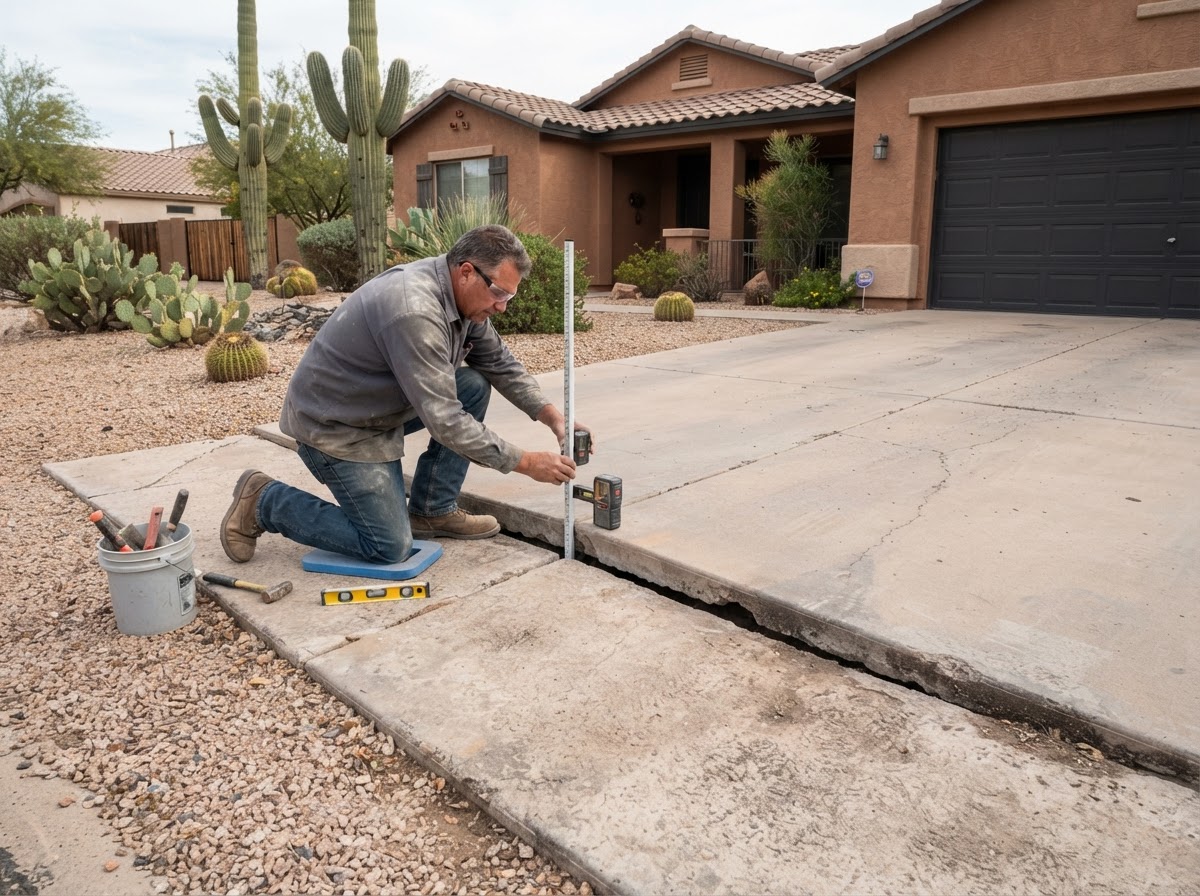
Yes. Customers seeking location-specific concrete leveling information for Chandler or Gilbert can use the dedicated location websites linked from our Service Areas section: Concrete Leveling in Chandler and Concrete Leveling in Gilbert. We do not discuss ownership or network structure, and these links are limited to this relevant context.
How do I request concrete leveling service?+
You can request service by calling (480) 914-9859 or by submitting the service form on this page with your Full Name, Phone Number, Email, project Address, and Service Request. We follow up to confirm details and schedule an on-site evaluation. The two text-messaging consent boxes are optional and do not have to be checked to submit.
Dedicated Chandler & Gilbert Resources
For location-specific concrete leveling information, use the dedicated location websites:
Why Tempe Concrete Leveling Is a Strong Local Choice
- 10+ Years Experience in hands-on concrete leveling.
- Insured service for residential and commercial slabs.
- Specialized concrete-leveling focus — settled and uneven slabs are what we do.
- Honest repair-vs-replace guidance based on the slab in front of us.
- Transparent cost-factor explanation so you know what moves a price.
- Familiarity with Tempe property and hardscape conditions.
- Clear next steps — call or submit the form and we follow up.
Request Concrete Leveling Service
Call now or send your project details. We'll evaluate your slab and recommend lifting only where it makes sense. The two text-messaging consent boxes are optional — you can request an estimate without opting in to texts.
Request Concrete Leveling Service
Full Name, Phone, Email, project Address, and Service Request — we'll take it from there.