10+ Years Experience|Insured
Concrete leveling crew lifting a sunken residential driveway slab in an Arizona setting with polyurethane injection equipment
10+ Years ExperienceInsured

Tempe Concrete Leveling: Concrete Lifting & Sunken Slab Repair in Tempe, AZ

Level settled, uneven concrete without assuming every slab must be replaced. We lift and stabilize driveways, sidewalks, patios, pool decks and garage floors — evaluating each slab first and recommending lifting only where it is genuinely appropriate.

Older central Tempe homes and mixed-era neighborhoods sit beside new construction across the city, and their driveways, walkways, patios and pool surrounds face long dry stretches followed by seasonal moisture changes. Settlement can be associated with poorly compacted fill, void development, erosion or washout, drainage issues, and changing soil moisture — but a visible dip does not by itself prove the cause. Leveling is appropriate only when the slab is structurally suitable to lift; replacement or further structural evaluation may be more appropriate when concrete is badly fractured, deteriorated, or affected by a deeper structural problem. With 10+ years of hands-on experience and insured service, our goal is an honest read on your slab and a clear next step.

10+ Years Experience · Insured

Request an Estimate

Tell us about your project. We’ll follow up with clear pricing and next steps.

The customer/project address for the work.

Text message consent (optional)

Consent is optional. You may request an estimate without opting in to text messages.

Why Choose Tempe Concrete Leveling for Concrete Lifting in Tempe?

Property owners call us because they want a straight answer about whether a settled slab can be lifted or whether it needs a different fix. These are the things we focus on getting right.

10+ Years of Concrete Leveling Experience

More than a decade of hands-on work evaluating and lifting settled slabs across the East Valley. That experience shapes the first read on whether your concrete is a candidate for leveling — without inventing a founding date or a job count we cannot verify.

Insured Service for Residential and Commercial Properties

Tempe Concrete Leveling is insured for both residential and commercial slab work. We do not imply specific policy limits or carrier details; we simply confirm the insured status that matters to property owners.

Repair Recommendations Based on the Condition of the Slab

Lifting is recommended only where it is genuinely appropriate. When concrete is badly fractured, deteriorated, or affected by a deeper structural problem, we say so and point you toward replacement or further structural evaluation rather than forcing a lift that won't hold.

Clear Process, Pricing Factors, and Next Steps

Our process runs from on-site evaluation and elevation measurement through repair recommendation, estimate, lifting or stabilization, injection-hole finishing and cleanup, and a final walk-through. We explain the cost factors that move a price so you know what you're paying for.

Residential Concrete Leveling Services in Tempe

Each residential application below is a distinct situation with its own slab condition, access, and drainage considerations. We evaluate before we recommend.

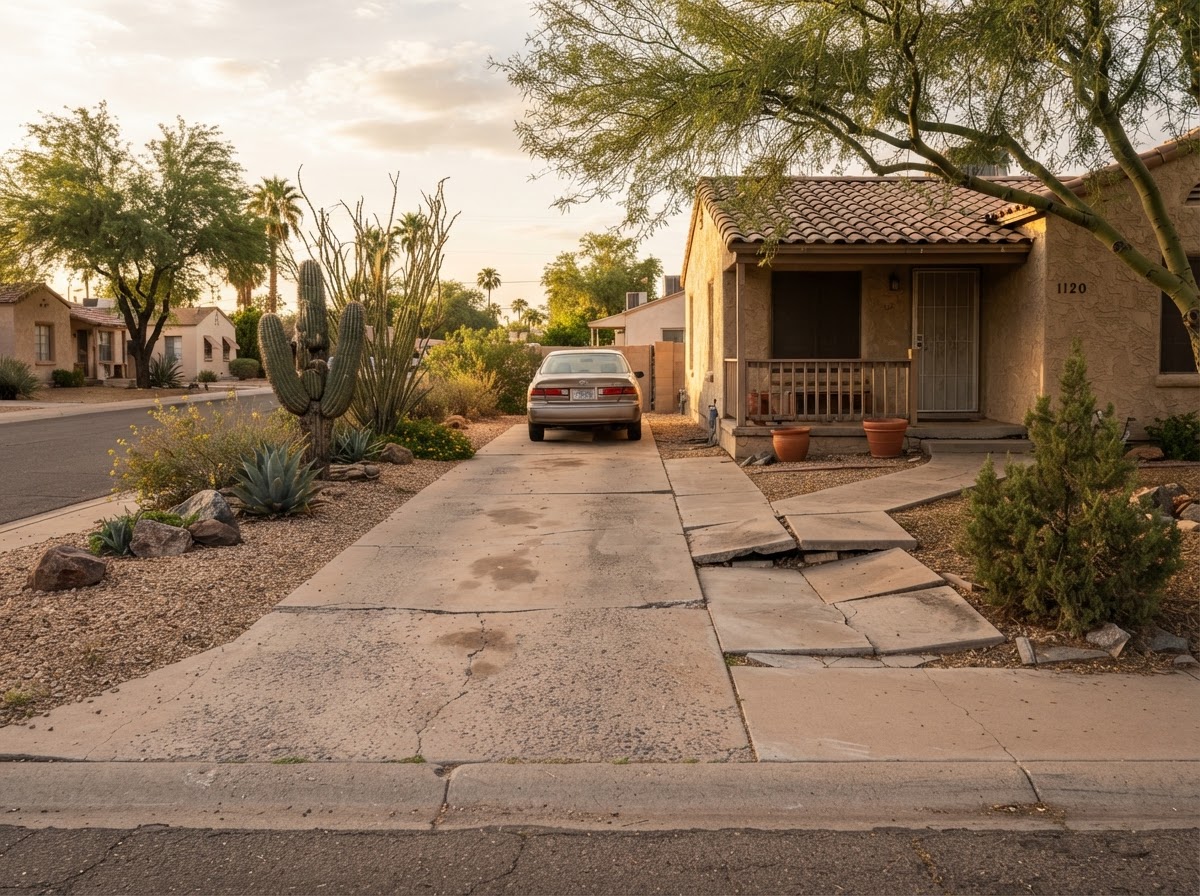
Sunken concrete driveway slab in an Arizona front yard with one panel settled below an adjacent panel

Driveway Concrete Leveling

Driveway concrete leveling addresses sunken or tilted driveway slabs, transitions between panels, and garage approaches on residential properties where the concrete slab remains structurally suitable for lifting.

We measure the elevation difference, check drainage and the condition of control joints and expansion joints, then lift the settled panel using polyurethane foam or an appropriate professional method through small injection holes.

The result is a smoother, safer driveway surface with reduced trip edges and improved drainage, restoring everyday use without the disruption of tearing out and repouring a liftable slab.

Learn more about Driveway Concrete Leveling →
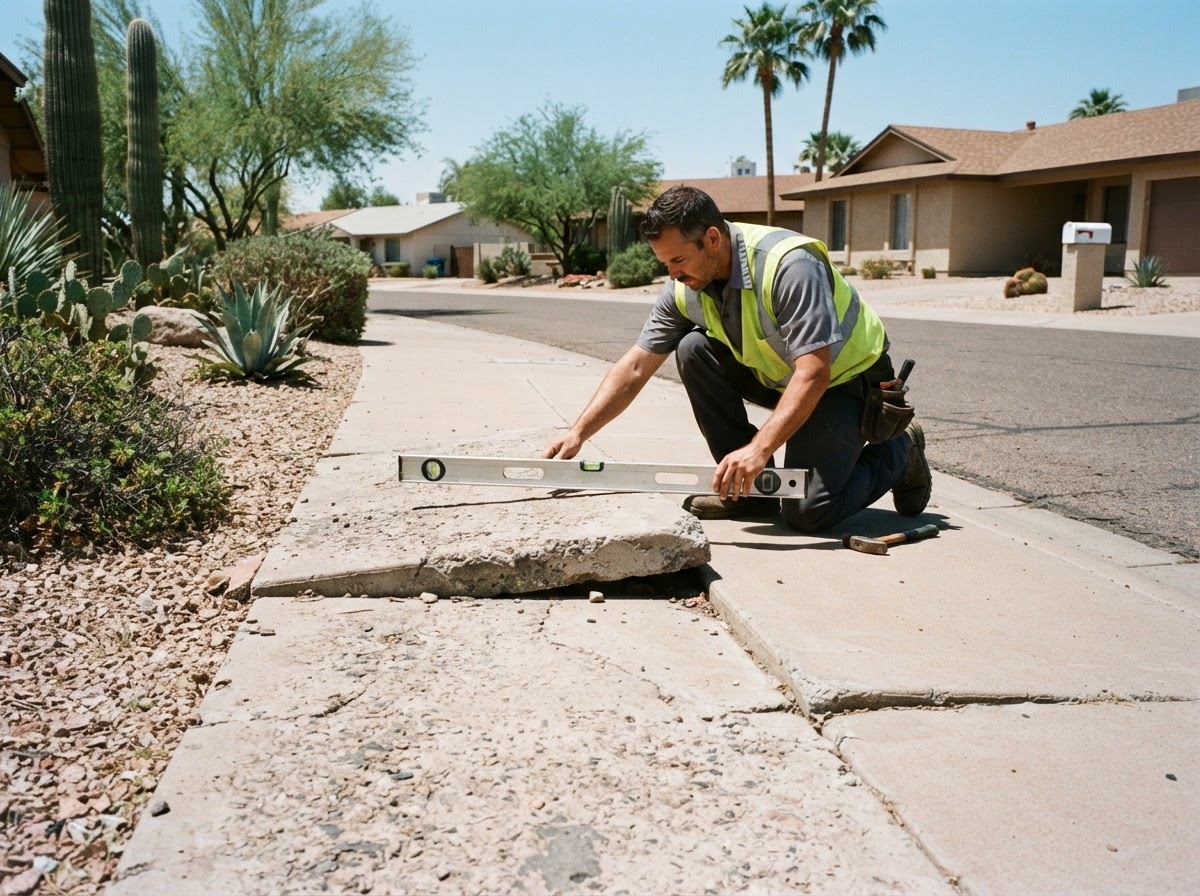
Uneven concrete sidewalk panels in a Tempe neighborhood with one slab raised above a sunken panel

Sidewalk & Walkway Leveling

Sidewalk and walkway leveling corrects raised or sunken panel transitions that create trip hazards on front walks, side yards, and pathways where the sidewalk panel can be safely lifted.

We assess the elevation difference at each joint, distinguish private-property walks from public right-of-way sections where applicable, and lift the offending panel using controlled injection through small drilled ports.

The outcome is a flatter, more walkable surface with fewer trip hazards, improving safety for residents and visitors without replacing structurally sound concrete.

Learn more about Sidewalk & Walkway Leveling →
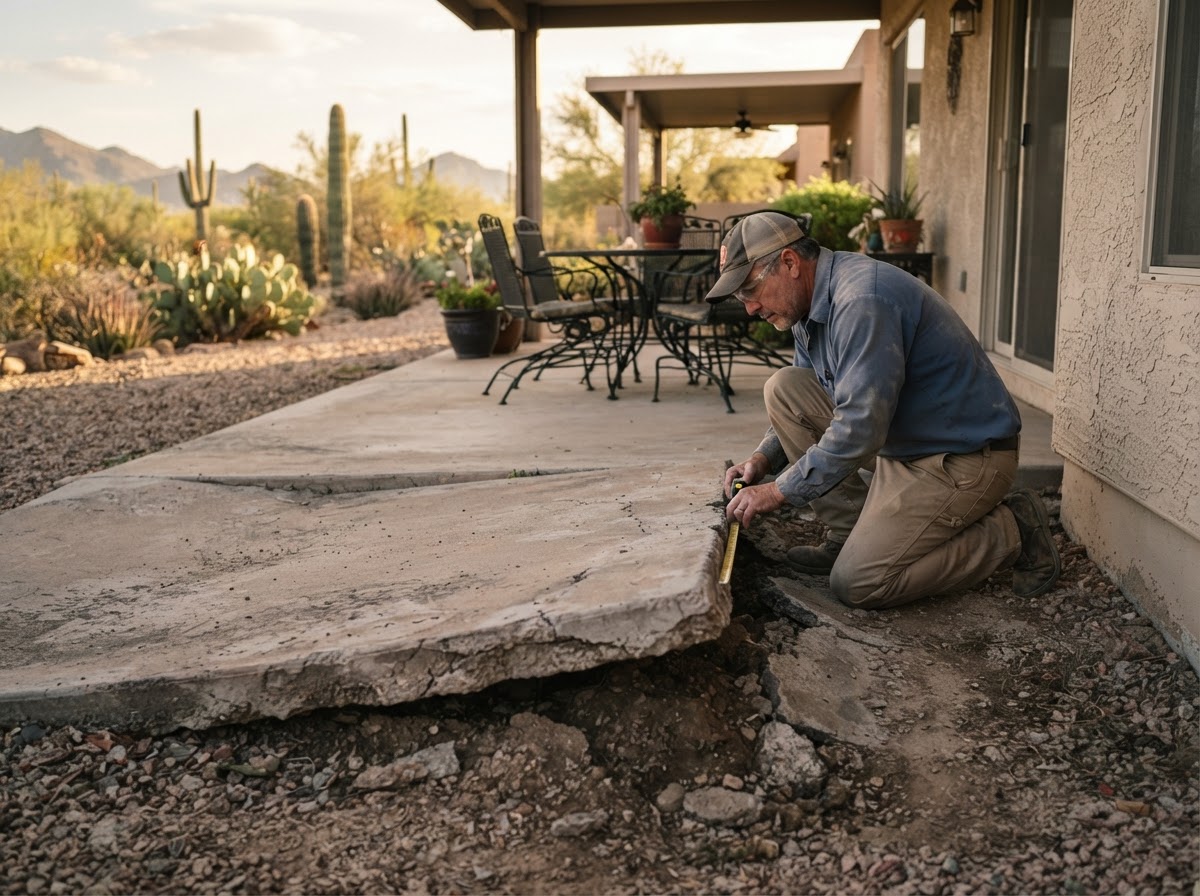
Settled backyard concrete patio slab in an Arizona home showing a sunken uneven section

Patio Concrete Leveling

Patio concrete leveling relevels settled patio slabs in outdoor living areas where sections have dropped, rock, or slope — including slabs that have begun draining toward a structure.

We check the slab condition and the drainage direction, then lift the sunken section with a controlled method and small injection holes, filling accessible void space beneath the patio slab to improve support.

The finished patio is more stable and usable, with improved surface drainage away from the home and a reduced risk of pooling or rocking underfoot during everyday use.

Learn more about Patio Concrete Leveling →
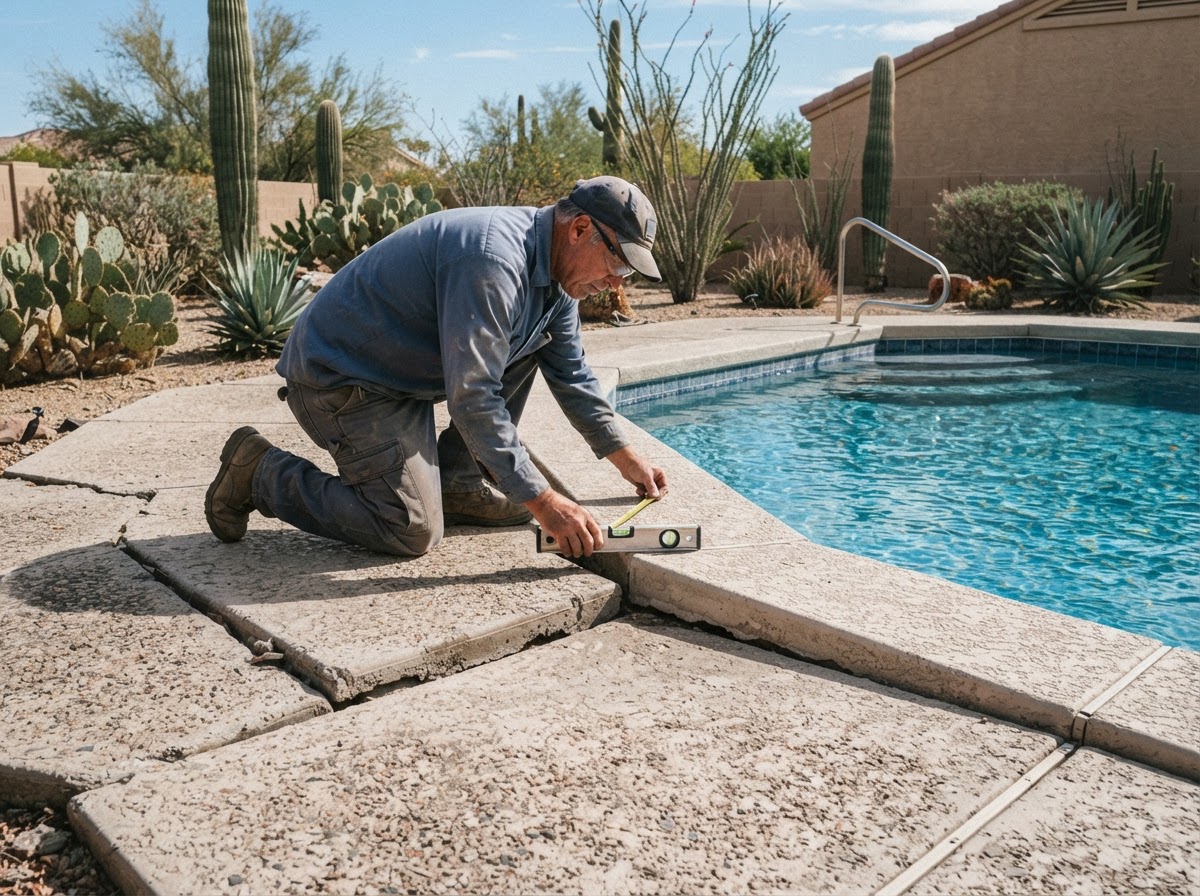
Uneven concrete pool deck surround in an Arizona backyard with settled slabs near the pool coping

Pool Deck Concrete Leveling

Pool deck concrete leveling addresses uneven pool-surround concrete that creates trip hazards or drainage issues around the deck, working carefully around pool structures and coping.

We lift settled deck panels with a controlled method through small injection points, checking elevation and drainage relative to the pool — while never claiming lifting repairs pool-shell structural defects, which is outside slab leveling scope.

The result is a safer, more even deck surface with reduced trip edges near barefoot traffic, improving the comfort and safety of the pool area for the property owner.

Learn more about Pool Deck Concrete Leveling →
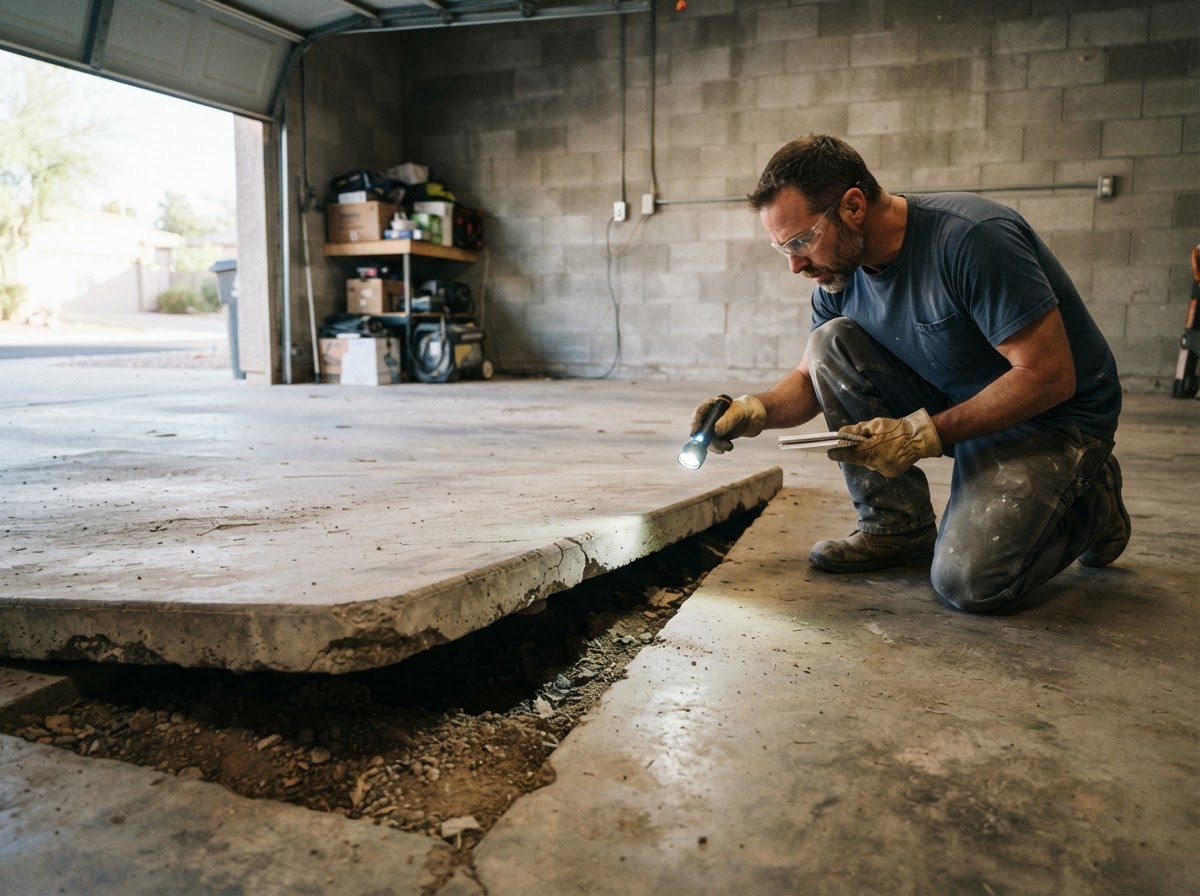
Settled concrete garage floor slab near a garage door opening with a visible void beneath the slab edge

Garage Floor Leveling

Garage floor leveling addresses settled garage slab sections and transitions at door openings where voids have developed beneath the slab and the concrete remains suitable for lifting.

We assess the slab for cracks and voids, measure the settlement, and lift the sunken section using a controlled method with small injection holes, filling accessible void space to improve support under the garage floor.

The outcome is a more even garage floor with a smoother transition at the door and better support beneath the slab, restoring everyday parking and storage use.

Learn more about Garage Floor Leveling →
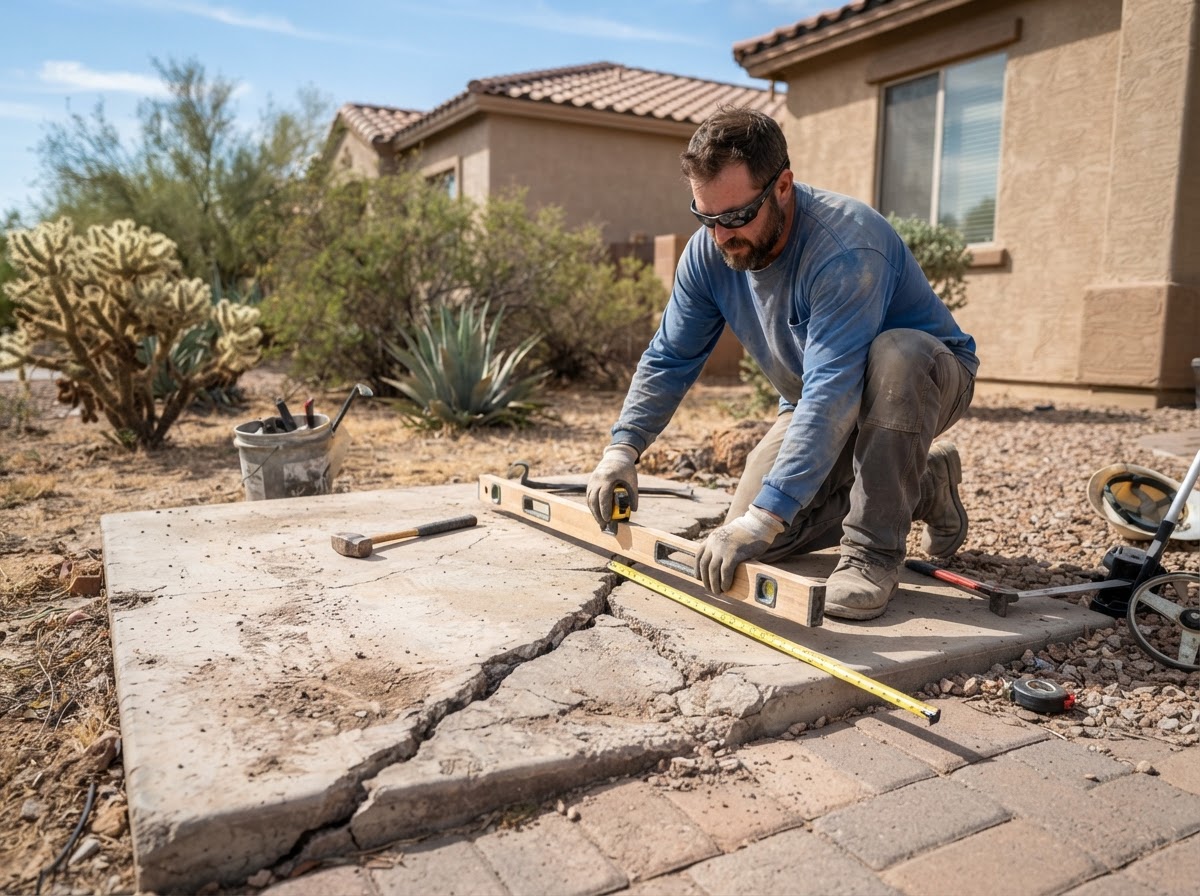
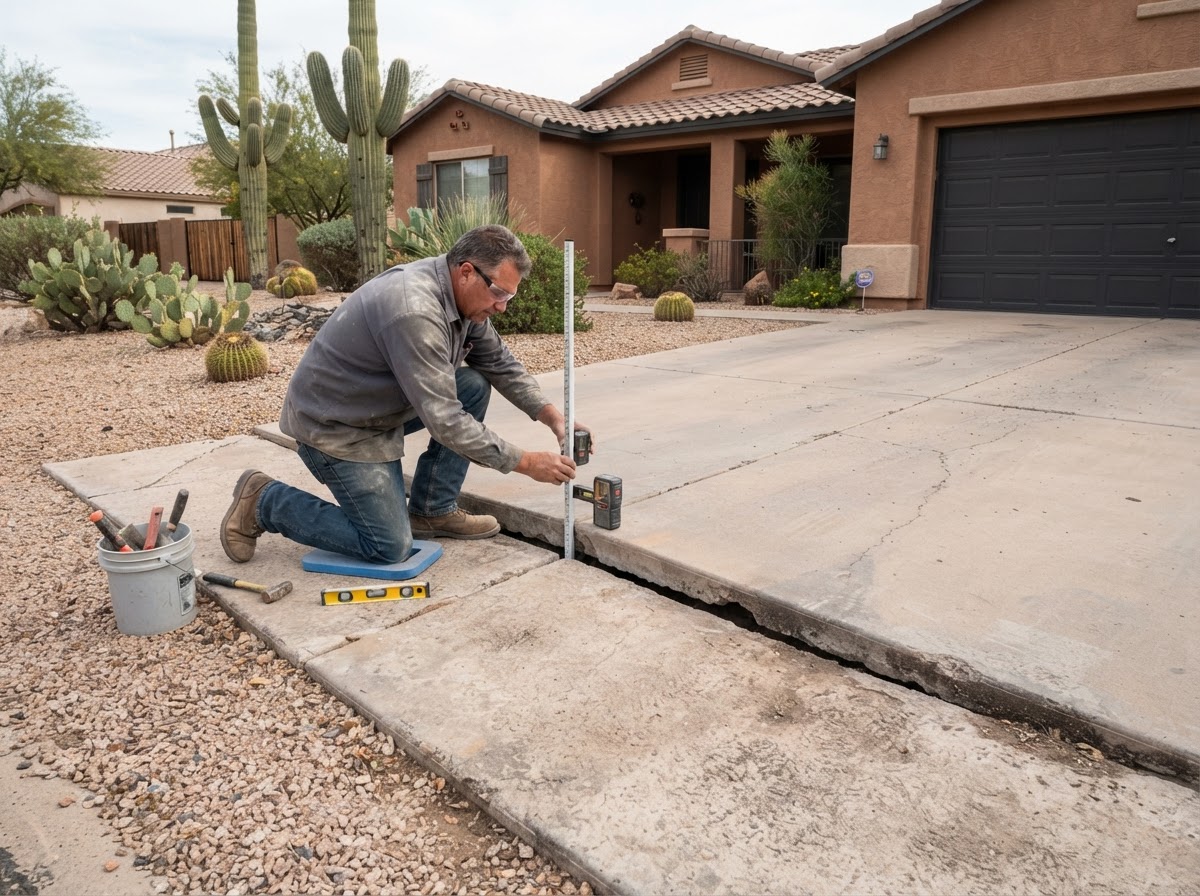
Worker measuring elevation on a settled isolated concrete slab with a spirit level in an Arizona yard

Concrete Slab Leveling

Concrete slab leveling is the general-purpose correction of isolated slab settlement for structurally suitable concrete, applicable to a range of flatwork where the slab can be predictably lifted.

We evaluate the slab condition, measure the elevation difference, identify any accessible voids, then lift the settled slab using a professional method matched to the slab, void, and access conditions.

The result is a level, stable slab restored to its intended elevation, with improved support and a finished appearance at the injection points after cleanup.

Learn more about Concrete Slab Leveling →

Commercial & Specialty Concrete Leveling in Tempe

Beyond the typical residential slab, these specialty applications address pedestrian safety, slab support, and light commercial flatwork.

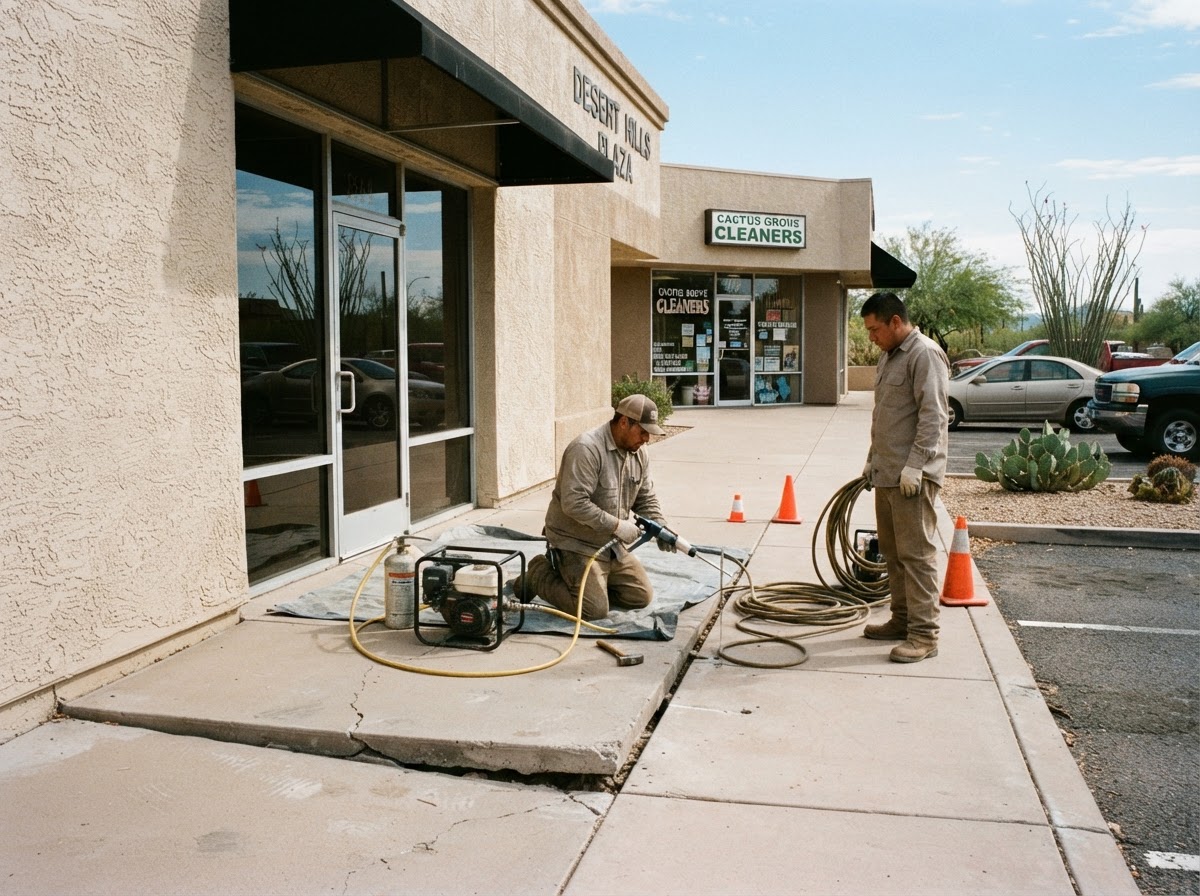
Commercial concrete walkway leveling work at a small Arizona commercial property with workers preparing equipment

Commercial Concrete Leveling

Commercial concrete leveling addresses settled walkways, slab transitions, and accessible flatwork at small commercial properties where pedestrian flow and property maintenance are concerns.

We assess the slab condition and pedestrian exposure, then lift settled sections with a controlled method through small injection holes — addressing trip transitions without inventing ADA compliance guarantees.

The outcome is a safer, more even commercial walking surface with reduced trip hazards and improved property maintenance, restoring access without the cost and downtime of full replacement.

Learn more about Commercial Concrete Leveling →
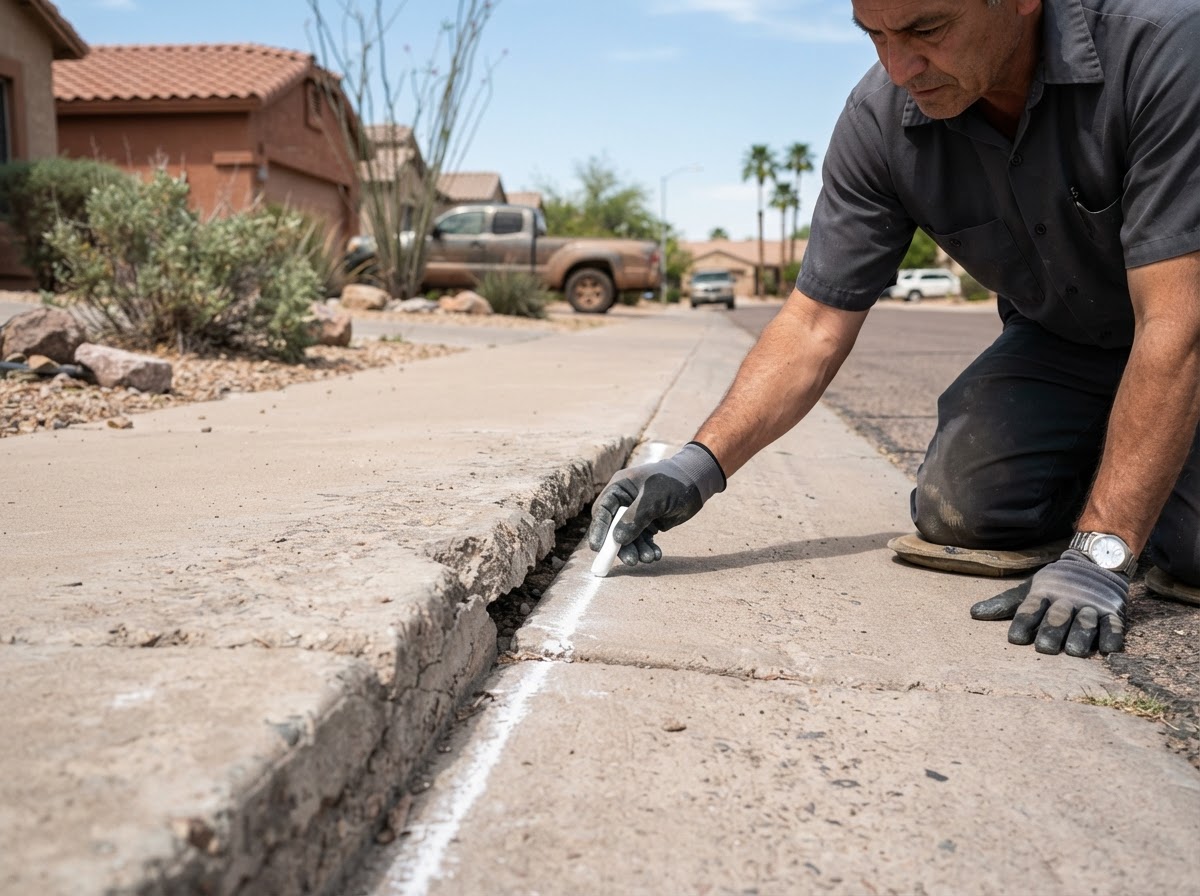
Close-up of a concrete trip hazard where one sidewalk slab is raised above another, marked with chalk

Trip Hazard Repair

Trip hazard repair addresses sharp elevation transitions between adjacent slabs that create pedestrian trip edges on walkways, driveways, and patios where the lifted slab is suitable.

We measure the elevation difference at the joint, assess whether lifting the lower panel or adjusting the transition is appropriate, and use a controlled method to reduce the step — we do not claim every trip hazard can be corrected by lifting.

The result is a reduced or eliminated trip edge and a safer walking surface, lowering the risk of stumbles and falls without replacing slabs that remain in sound condition.

Learn more about Trip Hazard Repair →
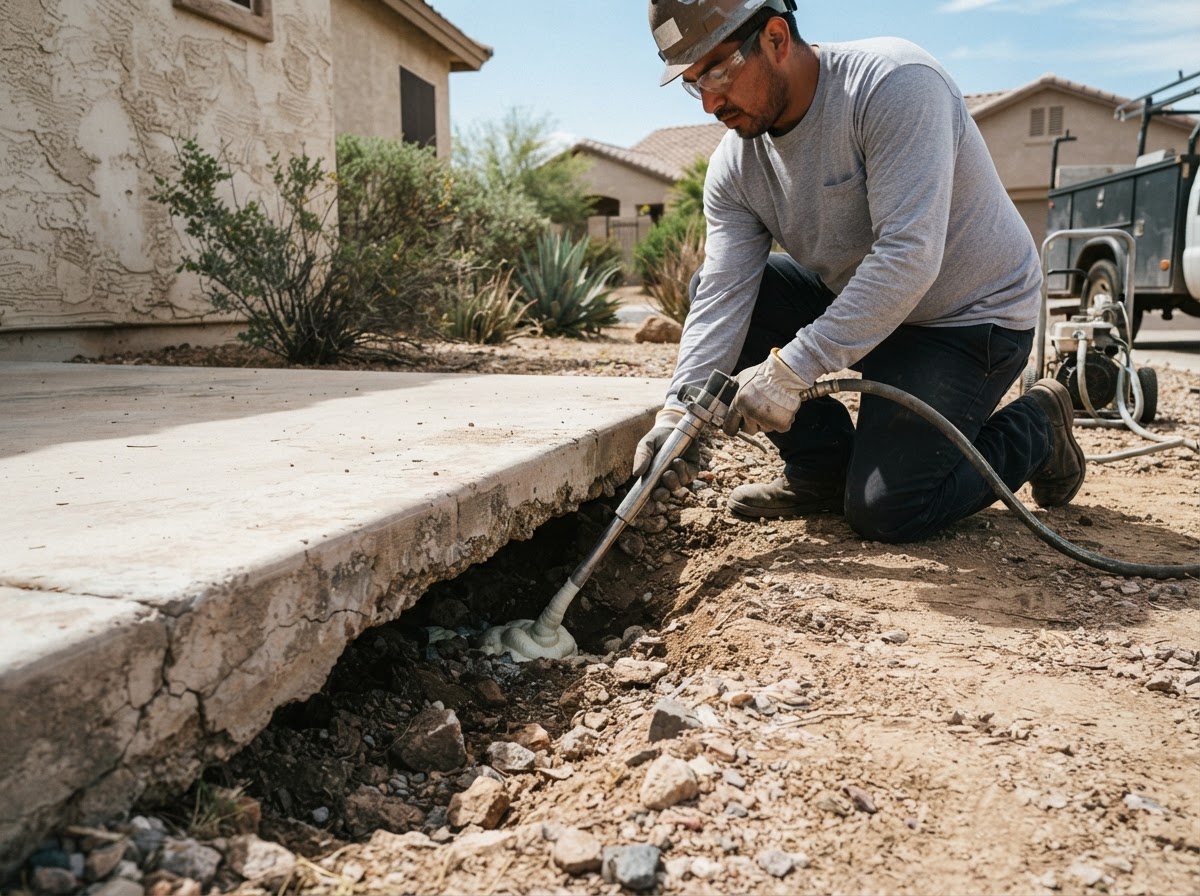
Worker injecting material beneath a settled concrete slab edge to fill a visible void in an Arizona yard

Void Filling & Slab Stabilization

Void filling and slab stabilization address accessible void space beneath suitable slabs where support has been lost to erosion, washout, or settlement of the base material.

We locate the unsupported area, fill the accessible void with an appropriate material through injection, and improve support beneath the slab — without implying deep-soil stabilization or foundation repair, which are outside this scope.

The outcome is a more stable, better-supported slab with reduced risk of further settlement in the treated area, extending the usable life of concrete that remains in suitable condition.

Learn more about Void Filling & Slab Stabilization →
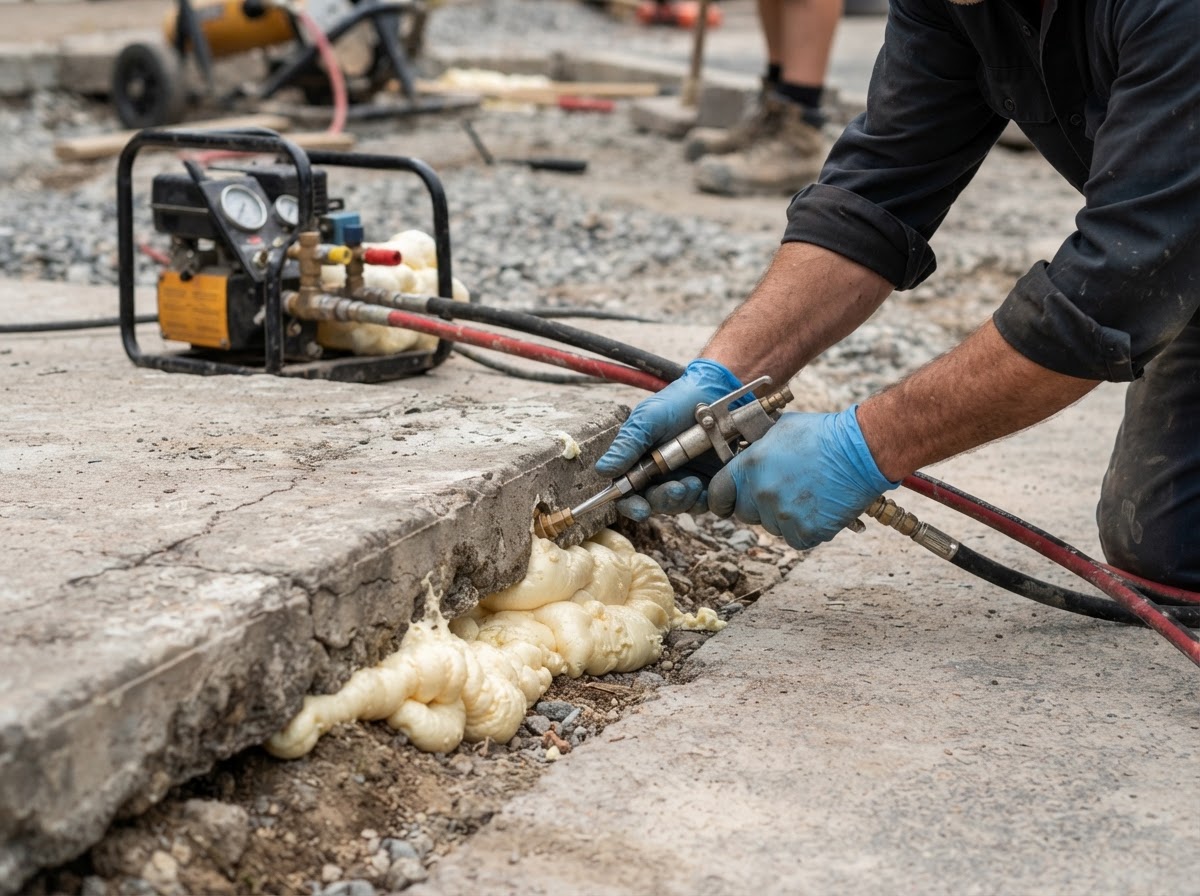
Close-up of polyurethane foam injection equipment with expanding foam filling beneath a concrete slab through a small drilled port

Polyurethane Foam Concrete Lifting

Polyurethane foam concrete lifting is a controlled lifting method that uses small drilled injection points and an expanding polyurethane material to raise settled slabs in general professional terms.

We drill small injection ports, pump the expanding polyurethane beneath the slab, and the material lifts the concrete as it expands — a method chosen based on slab condition, void, and access, not as a one-size-fits-all fix.

The result is a lifted slab with relatively small injection holes that are finished and patched, offering controlled lifting without the larger holes of some traditional methods. We do not provide DIY procedural instructions.

Learn more about Polyurethane Foam Concrete Lifting →

How Does Concrete Leveling Work in Tempe?

Concrete leveling is a measured process that starts with an honest assessment of the slab and ends with a final walk-through. We never assume a slab should be lifted before we look at it.

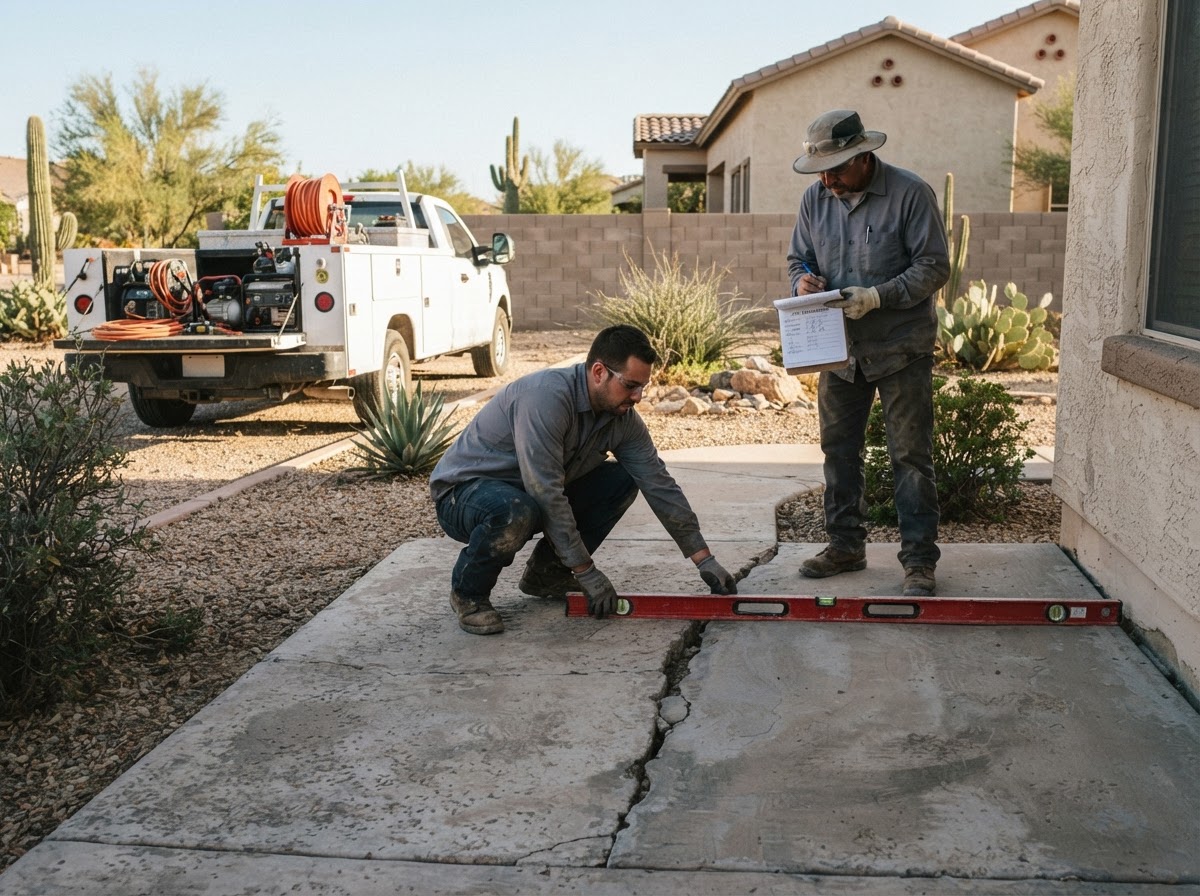
Two concrete leveling workers measuring the elevation of a settled slab with a long level in an Arizona yard

Step 1: Inspect the Slab and Measure Settlement

We look at cracks, joints, drainage, and the elevation difference across the slab, and assess the slab condition and surrounding structures to judge whether the concrete is suitable to lift.

Step 2: Identify Voids and Likely Settlement Factors

We check for visible drainage, erosion or washout indicators, unsupported areas, and subgrade conditions — identifying likely contributing factors without claiming hidden causes are certain.

Step 3: Recommend Lifting, Stabilization, or Replacement

We give honest repair-vs-replace guidance: lifting where the slab is suitable, stabilization where voids are the issue, and replacement or further evaluation where concrete is badly failed.

Step 4: Lift the Concrete With the Selected Method

We lift the slab using polyurethane lifting or another appropriate professional method chosen for the slab conditions — we never imply one method always wins.

Step 5: Finish Injection Points and Clean the Work Area

We patch and finish the small injection holes and clean the work area at a high level, leaving the site tidy.

Step 6: Check Elevation, Drainage, and Final Result

We take final measurements and do a walk-through with the owner, confirming the result without promising perfect restoration where it is not realistic.

Which Concrete Leveling Method Is Right for a Tempe Property?

No single method fits every slab. The right approach depends on the slab condition, the void, access, load, and the repair goal.

Polyurethane Foam Lifting

Polyurethane foam lifting uses small drilled injection points and an expanding polyurethane material for controlled slab lifting. Its general strengths include relatively small holes and a controlled lift, chosen based on slab condition and access — without unsupported cure-time guarantees.

Mudjacking / Slabjacking

Mudjacking, or slabjacking, is a traditional cementitious, slurry-based lifting method. Contractors may consider it in circumstances where a heavier fill material suits the slab, void, and load conditions, and access allows for the larger holes it typically requires.

Void Filling and Stabilization

Void filling and stabilization improve support beneath suitable slabs by filling accessible void space with an appropriate material. This addresses lost support from erosion or washout without implying deep-soil stabilization or foundation repair.

Concrete Replacement

Concrete replacement can be more sensible for severe fragmentation, major surface deterioration, extensive structural cracking, slabs that cannot be predictably lifted, or conditions outside the concrete-leveling scope. We do not publish DIY instructions for any method.

How Much Does Concrete Leveling Cost in Tempe, AZ?

Concrete leveling cost in Tempe depends primarily on slab size, amount of settlement, access, number of injection areas, void volume, repair method, and slab condition. Because a verified local pricing range has not been supplied into our production sequence, we publish transparent cost factors here rather than fabricated dollar figures.

What Changes the Cost of Concrete Lifting?

Cost is driven by the area of the slab, the lift height, site access, the number of slabs or injection areas, the volume of voids being filled, and the chosen repair method. A larger lift with limited access and significant void volume costs more than a small, accessible panel.

When Can Leveling Cost Less Than Replacement?

Leveling can cost less than removal and repouring when the slab is structurally suitable to lift, because it avoids demolition, hauling, forming, and cure time. We explain this economic logic without inventing unsupported percentage savings.

When Can Replacement Be the Better Value?

Replacement can be the better value when a slab is heavily broken, deteriorated, or structurally unsuitable — lifting a slab that cannot hold its elevation is not a saving. Honest repair-vs-replace guidance protects you from spending on a lift that won't last.

Need real numbers for your slab?

Request an on-site evaluation and estimate so we can measure your specific slab and give you honest repair-vs-replace guidance.

Call (480) 914-9859

Numeric price ranges: MISSING — no verified local pricing has been supplied. We will not invent dollar figures.

Ready for a Level, Safer Slab?

Tell us about your settled or uneven concrete. We follow up with clear pricing factors and repair-vs-replace guidance — no pressure, just an honest read.

(480) 914-985910+ Years Experience · Insured

Request an Estimate

Tell us about your project. We’ll follow up with clear pricing and next steps.

The customer/project address for the work.

Text message consent (optional)

Consent is optional. You may request an estimate without opting in to text messages.

Concrete Settlement and Uneven Slabs in Tempe

Tempe's environment creates recognizable conditions that can contribute to slab settlement — but none of them is a guaranteed diagnosis for every dip you see.

Long, intense dry periods alternate with seasonal monsoon moisture, and irrigation or runoff moving around hardscape can shift the moisture in the soil beneath a slab. In many neighborhoods, the base material and subgrade beneath older concrete were placed and compacted under different standards than today's, which can leave voids or inconsistent support. Poorly compacted fill, washout, erosion, and surface drainage that routes water toward or under a slab are all recognized contributors.

Central Tempe's older housing — around the Maple-Ash area and downtown near ASU — often has mixed-age concrete and mature landscaping that can influence drainage. North Tempe toward Papago, the Alameda area, and properties along the Apache corridor have their own lot layouts and drainage patterns. We treat these as context, not as a claim that every neighborhood shares the same soil or settlement issues.

Settled concrete driveway and front walkway in an older central Tempe neighborhood with mature desert landscaping

Do Concrete Repairs in Tempe Require Permits?

Concrete leveling performed entirely on private property may differ from work affecting public sidewalks, driveway approaches, or the public right-of-way; work in Tempe's right-of-way can require city engineering or permitting review.

  • Public right-of-way work is different from private-property slab work, and the rules that apply depend on where the slab sits.
  • Tempe Engineering, including the Private Development Engineering group or the applicable city authority, handles right-of-way and encroachment requirements for work that touches public areas.
  • We do not claim that all private slab leveling needs a permit, nor that no permit is ever required — the answer depends on the location and scope of the work.
  • Property owners should confirm requirements when work touches the public right-of-way or other regulated improvements. We do not fabricate code section numbers.

Specific permit code sections: MISSING — no verified code sections supplied. We will not invent permit exemptions or section numbers.

What Tempe Property Owners Say

We do not publish testimonials until we have real, verifiable reviews to share. Reviews will appear here as they are supplied.

Concrete Leveling FAQs — Tempe, AZ

Can sunken concrete in Tempe be leveled instead of replaced?+

Sunken concrete in Tempe can often be leveled instead of replaced when the slab remains structurally suitable for lifting. We inspect each slab before recommending a fix; badly fractured or deteriorated concrete, or slabs affected by a deeper structural problem, may be better replaced or evaluated further. Leveling is recommended only where it is genuinely appropriate.

What types of concrete can be lifted?+

Many types of flatwork can be lifted, including driveway slabs, sidewalk panels, patio slabs, pool deck sections, and garage floors, when the concrete is in suitable condition. The slab must be structurally sound enough to hold its lifted elevation; thin, shattered, or extensively cracked concrete may not be a candidate. We evaluate the slab before recommending lifting.

Can a cracked slab still be leveled?+

Some cracked slabs can still be leveled, but the crack pattern, deterioration, and structural condition determine whether lifting is appropriate. A few isolated cracks in otherwise sound concrete may not prevent lifting, while widespread or structural cracking can mean the slab won't hold. We assess the cracks before recommending any repair.

What is polyurethane concrete lifting?+

Polyurethane concrete lifting is a method that uses small drilled injection points and an expanding polyurethane material to raise a settled slab. The foam is pumped beneath the concrete and lifts it as it expands, offering controlled lifting with relatively small holes. The method is chosen based on slab condition, void, and access.

What is the difference between polyjacking and mudjacking?+

Polyjacking uses an expanding polyurethane foam through small injection points, while mudjacking, or slabjacking, pumps a traditional cementitious slurry through larger holes. Polyjacking typically leaves smaller holes; mudjacking uses a heavier fill material. Neither is automatically better — the choice depends on the slab, void, access, and load.

Can you level a sinking driveway?+

A sinking driveway can often be leveled when its slabs remain structurally suitable for lifting. We measure the elevation difference, check drainage and joints, and lift the settled panel using an appropriate method. A driveway slab that is badly broken or deteriorated may be better replaced, which we will tell you up front.

Can uneven sidewalk panels be lifted?+

Uneven sidewalk panels can often be lifted when the concrete is suitable, reducing trip transitions between panels. We assess whether the work is on private property or public right-of-way, since that affects requirements, and lift the lower panel through small injection holes. Not every trip hazard can be corrected by lifting.

Can pool deck concrete be leveled?+

Pool deck concrete can be leveled when the deck slabs are suitable for lifting, improving trip hazards and drainage around the pool. We work carefully around pool structures and never claim lifting repairs pool-shell structural defects, which is outside slab leveling scope. The result is a safer, more even deck surface.

Can patio slabs that drain toward the house be corrected?+

Patio slabs that drain toward the house can often be corrected by lifting the settled section to improve the slope, when the slab is suitable. We check the drainage direction and slab condition, then lift the sunken area and fill accessible voids. Badly cracked patio concrete may need a different approach.

What causes concrete slabs to settle in Tempe?+

Concrete in Tempe can settle when support beneath the slab changes because of conditions such as poorly compacted fill, void development, erosion, washout, drainage problems, or changing soil moisture. Long dry periods and seasonal monsoon moisture can contribute. We identify likely factors during an inspection without claiming every case shares the same cause.

Does concrete leveling repair foundation problems?+

No, concrete leveling is not a foundation repair method. Leveling addresses settled surface slabs like driveways, sidewalks, and patios; suspected structural or foundation movement may require appropriate specialist evaluation. We are clear about the boundary between slab leveling and foundation work.

How do you decide whether to lift or replace concrete?+

We decide by inspecting the slab's condition, measuring the elevation difference, and judging whether the concrete can hold its lifted elevation. Sound, suitable slabs are candidates for lifting; badly fractured, deteriorated, or structurally compromised slabs are pointed toward replacement or further evaluation. The decision is based on the slab, not a default preference.

Does concrete leveling require a permit in Tempe?+

Requirements depend on where the work occurs and its scope. Work affecting public sidewalks, driveway approaches, or the public right-of-way may involve Tempe engineering or permitting review, while private-property slab work can be treated differently. We do not claim all leveling needs a permit or that none ever does; owners should confirm requirements for right-of-way work.

How much does concrete leveling in Tempe cost?+

Concrete leveling cost in Tempe depends on slab size, amount of settlement, access, number of injection areas, void volume, repair method, and slab condition. Because a verified local pricing range has not been supplied, we publish transparent cost factors rather than fabricated dollar figures. Request an on-site evaluation for numbers specific to your slab.

What happens when I request an estimate?+

When you request an estimate, we contact you to confirm your project address and service request, then schedule an on-site evaluation. We assess the slab, measure settlement, and give a repair recommendation and estimate. We do not promise a specific response-time guarantee, but we follow up to move the conversation forward.

Do you serve areas outside Tempe?+

Yes, in addition to Tempe we serve nearby areas including Mesa, Scottsdale, Ahwatukee / South Phoenix, and Guadalupe, which are planned on this site's service-area pages. Customers seeking location-specific information for Chandler or Gilbert can use the dedicated location resources linked from our Service Areas section.
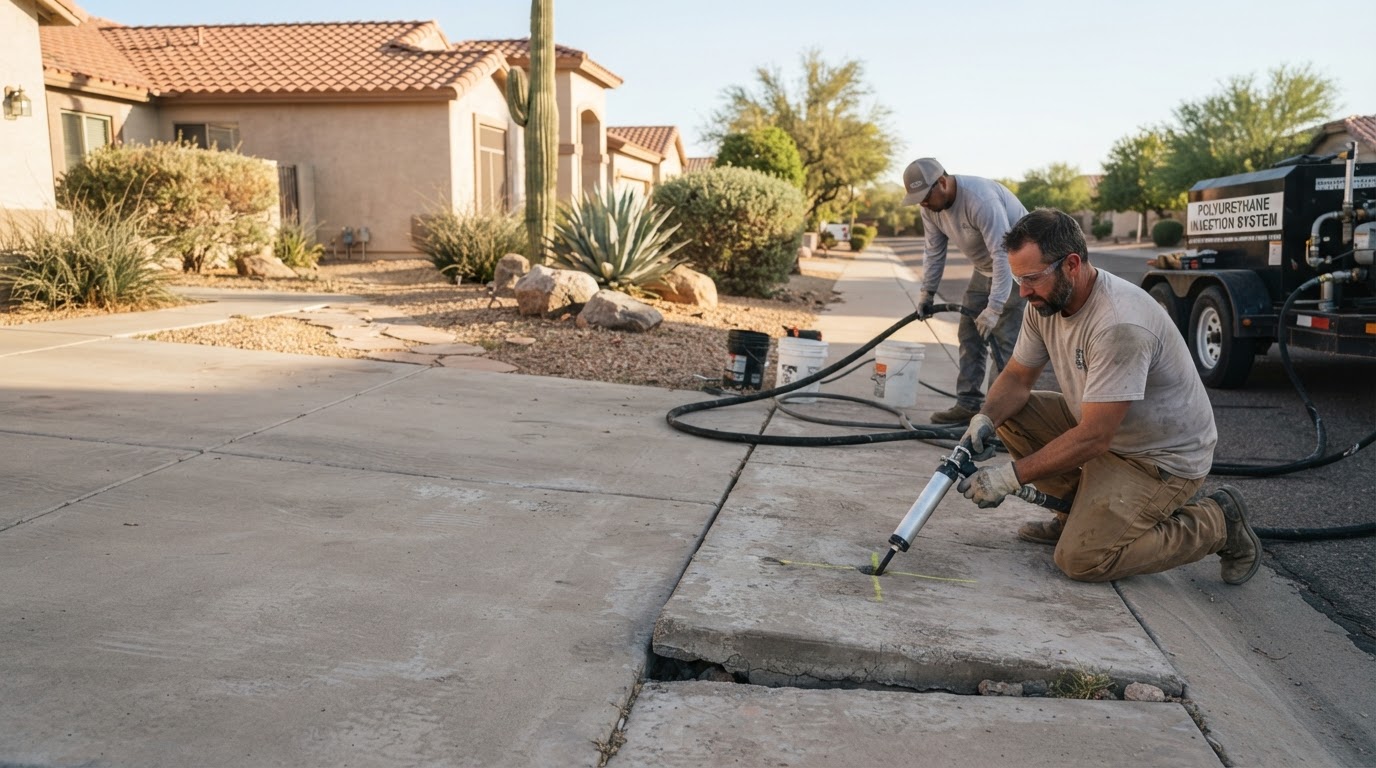
Request Concrete Leveling in Tempe

Call now or send your project details. We'll evaluate your slab, recommend lifting only where it's appropriate, and give you clear pricing factors and next steps.

Call (480) 914-985910+ Years Experience · Insured

Request Concrete Leveling in Tempe

Five quick fields — Full Name, Phone, Email, project Address, and Service Request. We'll take it from there.

(480) 914-985910+ Years Experience · Insured

Request an Estimate

Tell us about your project. We’ll follow up with clear pricing and next steps.

The customer/project address for the work.

Text message consent (optional)

Consent is optional. You may request an estimate without opting in to text messages.

10+ Years Experience · Insured
Call Now